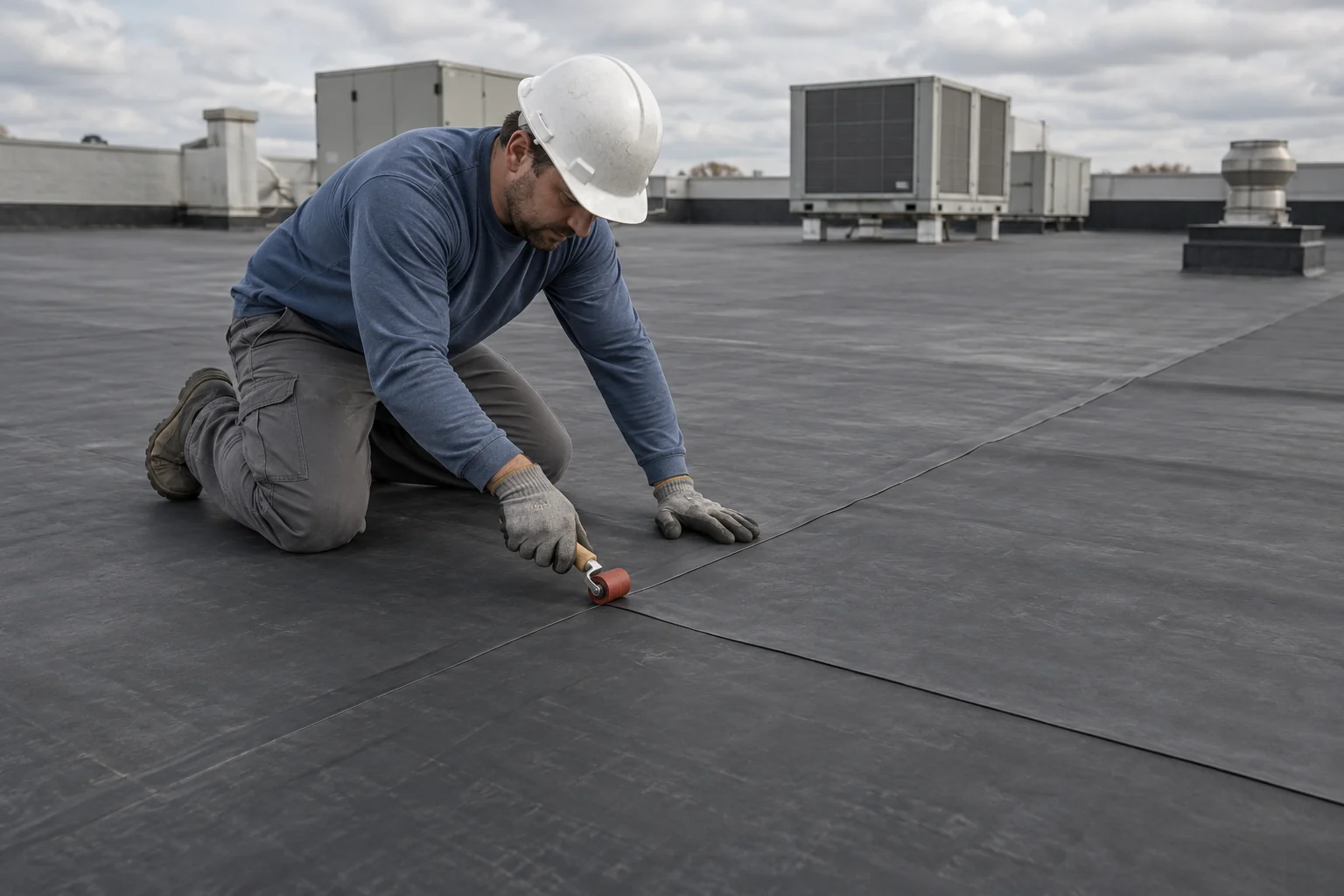
Repair The Material That Is Actually There
EPDM uses compatible repair and seam materials specific to its system. It should not be treated as a thermoplastic membrane simply because both are single-ply roofs. Identifying the membrane and existing repairs is necessary before selecting a method.
Surface condition affects repair preparation. Dirt, old sealants and unsuitable patches may need attention so the repair connects to sound, compatible material. A new patch cannot compensate for a weak base beneath it.
Check Edges, Seams And Equipment Details
Roof edges and penetrations can experience conditions different from the open field. We inspect laps, flashings, terminations and equipment transitions when evaluating leaks or planning maintenance. The point where water is visible inside may not be directly below the defect.
A localized opening may be repairable when the surrounding system is sound. More widespread seam or material deterioration can require a broader scope. We establish the extent instead of relying on the size of one ceiling stain.
Consider Moisture And Attachment
The membrane is only one part of the assembly. Loose areas, wet insulation or damaged supporting material can change the appropriate repair or replacement decision. Further investigation may be needed when visible inspection cannot resolve those conditions.
Where the damage is limited, targeted removal may allow serviceable material to remain. When the roof cannot reasonably support the intended work, replacement should be considered on its actual merits.
Evaluate Details And Previous Repairs
An EPDM roof can contain original membrane, replacement flashing and patches from different periods. The assessment should identify which materials provide a suitable base for the intended repair. An old patch may remain serviceable, or its edges and adhesion may need attention before another repair is made.
Surface preparation matters because the new repair must connect to the roof. Contamination and loose material should not be hidden beneath another layer. The selected system’s methods guide the work rather than a generic assumption that all rubber-looking materials accept the same products.
At walls, corners and equipment, the detail may be more important than the open field. The repair should address the connection and attachment where they contribute to the problem. A surface seal over an unstable termination can leave movement unresolved.
Where water has entered, the assessment may need to investigate layers below the membrane. A repair can close the entry point without restoring wet insulation. Local removal and replacement may be necessary to establish a sound assembly within the work area.
For a larger project, these findings also inform what can remain. A useful roof should not be removed solely because one detail failed, but material that cannot support the intended work should not be retained simply because a new membrane could cover it.
Questions About EPDM Roof Projects
Can an EPDM seam be repaired without replacing the entire roof? Often a defined defect can be addressed when the surrounding membrane and assembly are suitable. The method must be compatible with the existing system and the condition of the seam area.
Does a recurring leak mean the membrane has failed everywhere? No. The source may be one unresolved detail or several separate defects. Investigation should establish the extent rather than infer it from the number of times water has appeared inside.
Can equipment discharge affect the roof? The substance and exposure should be identified when relevant. Compatibility should be evaluated for the selected system rather than assumed for every operating condition. Tell us about unusual discharge or rooftop processes during the assessment.
Will a replacement automatically correct standing water? Only if the scope addresses the cause. Drainage can involve outlets, surface configuration or supporting conditions. A new membrane alone is not proof that those issues have been corrected.
Can a project be planned in sections? It may be possible when the assembly, boundaries and building requirements support that sequence. Connections between completed and remaining areas need suitable treatment. Phasing should follow the roof rather than simply divide total area into equal portions.
What should the request include? Start with the commercial location, the problem or planned work and any known roof information. If material identification is uncertain, say so. The assessment can establish the system and the appropriate work without requiring the owner to diagnose hidden conditions.
Request An EPDM Roof Assessment
Tell us about current leaks, previous repairs and any rooftop equipment changes. The estimate request starts with your property and the work you need; it does not require you to diagnose the assembly. Get An Estimate for commercial EPDM roofing in Mesa.
If the concern involves a previous repair, describe whether the symptom changed afterward. That history helps focus inspection without assuming the old patch is the current source.