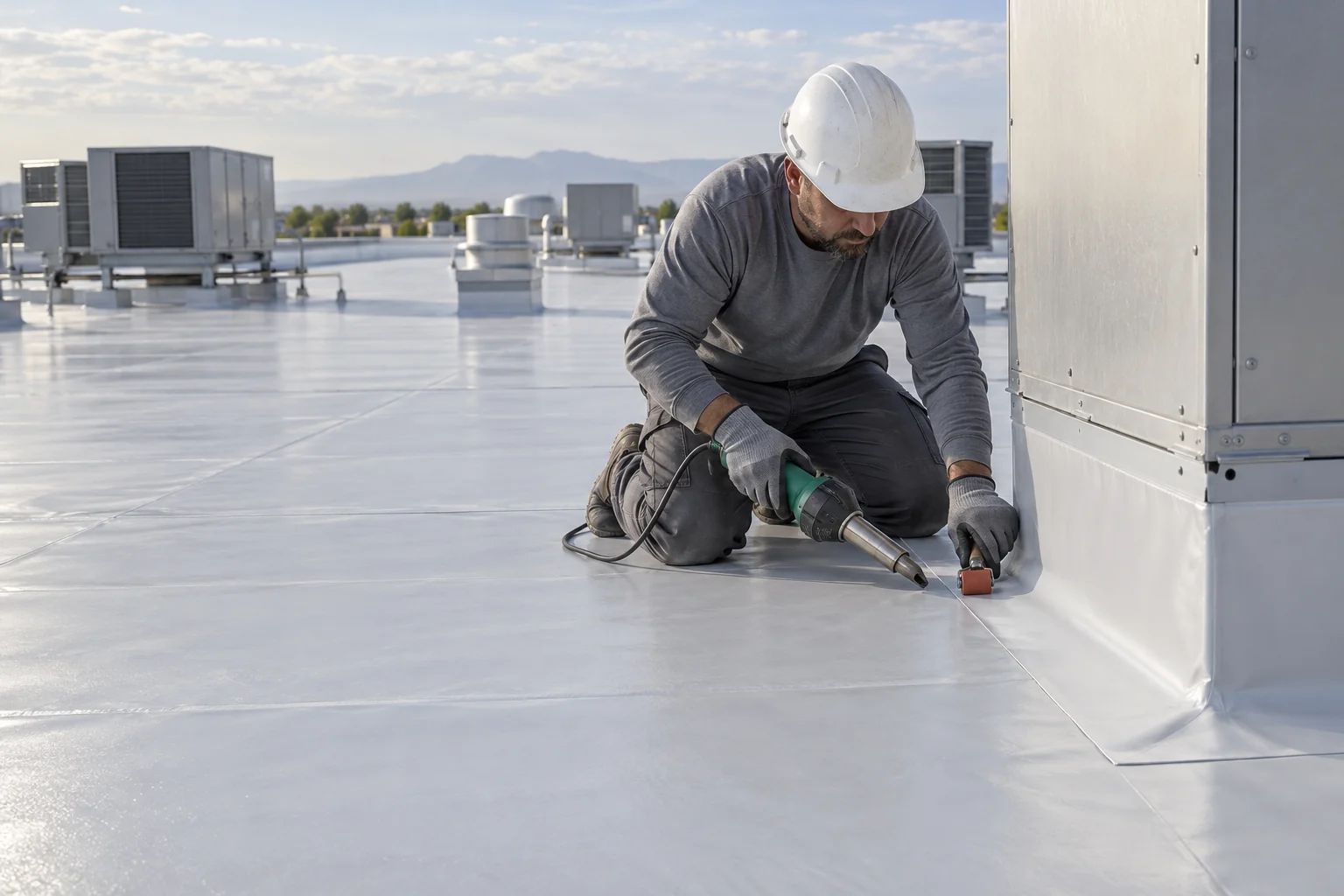
Choose A System For Its Actual Use
PVC roofing is a thermoplastic membrane system. Product selection should consider the assembly and rooftop exposures rather than relying on appearance alone. If equipment discharges onto the roof, the substance and conditions need to be identified before compatibility is assumed.
Different membrane products and accessories have specific requirements. A repair should use components appropriate for the existing system, not a generic patch chosen because it matches the roof color.
Evaluate Repairable Defects
A puncture, open seam or damaged flashing may permit localized repair when adjacent material is suitable. Preparation and connection to sound membrane are essential. We examine previous patches and the condition around the problem so the repair does not simply move the weak point.
Leaks at drains, curbs or perimeter transitions may require work on the detail rather than a large area of field membrane. Investigation helps distinguish a limited defect from a broader assembly concern.
Plan Replacement When Necessary
A replacement scope involves more than selecting a membrane. Insulation, attachment, drainage and supporting conditions affect the completed assembly. Where hidden moisture is suspected, assessment is needed to determine what can remain.
The building’s operation also matters. Work zones, equipment access and any planned penetrations should be coordinated so the new roof is not immediately disrupted by another project.
Review Building Exposure And Roof Details
A commercial roof can be exposed to more than rainfall. Equipment discharge and service activity may affect the membrane in localized areas. Describe those conditions when requesting work so compatibility can be evaluated for the actual product and exposure. No broad membrane category should be treated as suitable for every chemical or operating condition.
The roof detail also matters. Curbs, pipes and edges interrupt the field surface and need connections appropriate to the system. A leak near a penetration may call for flashing work rather than a large replacement of the open membrane. The assessment should distinguish the cause before setting the boundary.
Previous patches can affect repair preparation. Loose or incompatible material may need removal so the new repair reaches a suitable surface. A larger patch does not solve an unsuitable base merely by covering more area.
For replacement, the supporting assembly requires review. Insulation, deck condition, attachment and drainage influence the completed roof. Suspected moisture can require investigation before deciding which layers can remain. The visible membrane is not the whole project.
Known equipment changes should be coordinated with the work. A new opening needs a suitable roofing connection, and future access should protect the surface. Planning these details helps keep a completed roof from being immediately disturbed by another project.
Questions About PVC Roof Repair And Replacement
Can an aged PVC roof be repaired? It may be possible when the surrounding material remains suitable and can be prepared for the selected method. Condition and compatibility determine repairability; age alone does not establish the answer.
Are all PVC products and accessories interchangeable? The repair should follow the requirements of the existing and selected system. A product label or similar appearance is not enough to establish compatibility. Material identification and appropriate instructions matter.
What if only a drain detail leaks? A localized repair may be practical if adjacent membrane and layers remain sound. The source needs investigation because water near a drain can involve an obstruction, roofing connection or another component. The scope should address the condition found.
Can a new membrane cover wet insulation? Suspected wet or unstable material needs evaluation and appropriate correction. A new surface does not make damaged layers serviceable. Retention decisions should be based on suitability for the intended assembly.
Does repair pricing depend on total roof size? The area provides context, but a repair depends on the defect, access, materials and affected layers. The request form begins an assessment rather than applying a generic price to the building’s dimensions.
Can the roof be used during equipment maintenance? Access should respect the system and any needed protection. New supports and penetrations should be integrated correctly. If later work damages the membrane, use compatible roofing repairs instead of an unrelated patch that may complicate future maintenance.
A practical project starts with those conditions and the owner’s needs. It does not require choosing a new membrane before the existing roof has been assessed.
Get An Estimate
Share the commercial building location, the symptoms or project and the roof material if known. A PVC roof assessment establishes the relevant repairs or replacement requirements before a firm price can be prepared.
Where multiple roof sections meet, the transition should be assessed with the field material. A sound section can still depend on an adjoining detail that needs correction, so the project boundary should reflect the actual construction.