Leak Far From Any Opening
Water drips in a back room with nothing on the roof directly above it.
Water Between Layers
Moisture trapped between an old and a newer layer travels until it finds a seam or fastener.
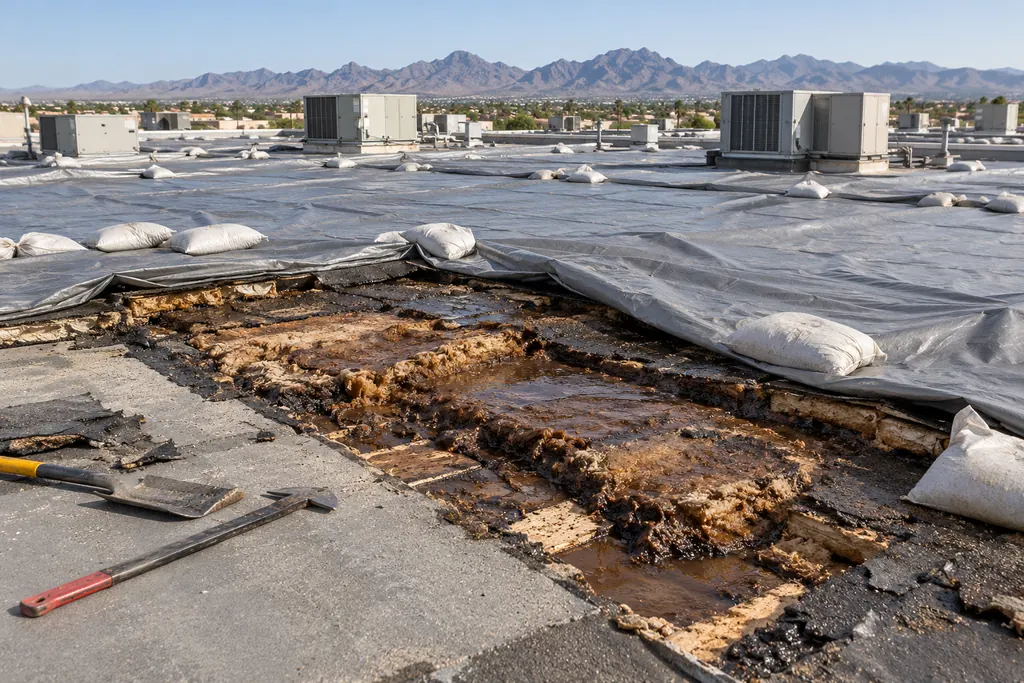
Commercial roofing in Apache Junction starts with counting what is already on the roof, because older buildings here often carry past recovers and patch layers.
The Apache Junction Angle
Many commercial roofs in Apache Junction have been patched and recovered more than once. A roof that looks like one membrane can hide gravel, cap sheet, or an old rubber layer underneath, and that history decides what the next roof can be.
One existing layer over dry insulation leaves room for a recover. Two layers, or wet board between them, means a tear-off to the deck. Apache Junction is its own city, so permits go through its Development Services office.
Apache Junction Roof Conditions
Older layered roofs leak in ways that confuse people downstairs. Each pair shows a sign inside and the roof detail behind it.
Water drips in a back room with nothing on the roof directly above it.
Moisture trapped between an old and a newer layer travels until it finds a seam or fastener.
Tiles bow in one area and dry out between storms, then sag again.
Wet board under two layers stays damp for months and adds weight over the deck.
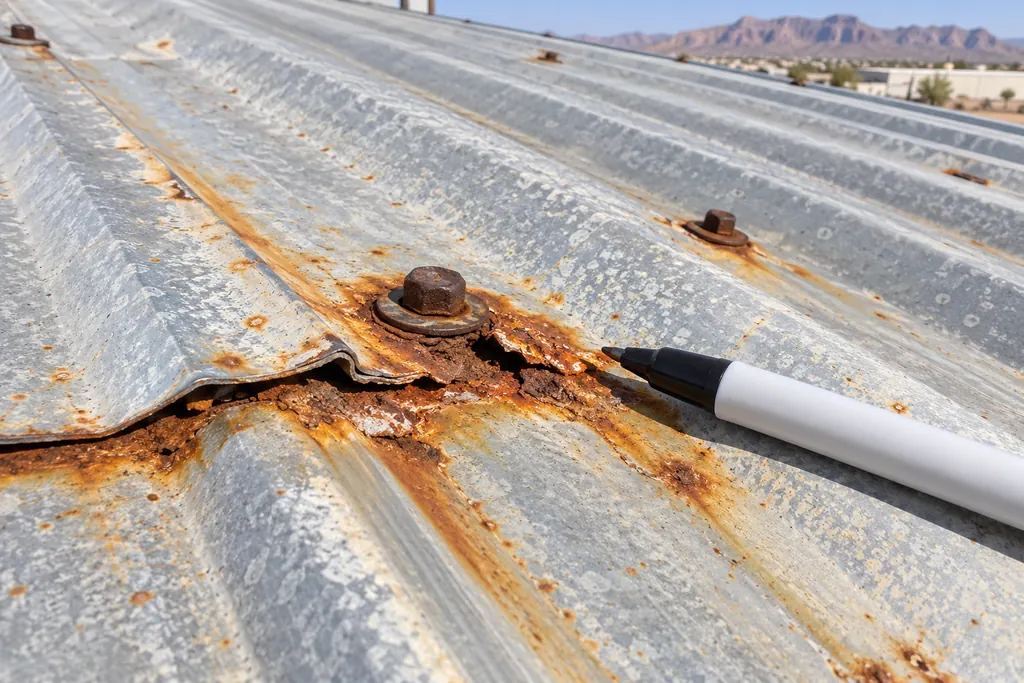
Maintenance staff find rust streaks along joists in a warehouse bay.
Panels on metal buildings rust where laps hold water and sealant has dried out.
Someone hears the roof lift and drop overhead during gusts.
A recover fastened into soft old layers can pull loose at the perimeter first.
Puddles form on the floor near columns after heavy rain.
Each added layer raises the roof surface around drains, leaving them low and partly blocked.
Roof Benefits
These gains depend on what the core cuts show. The inspection tells us which ones apply to your building.
Knowing exactly how many layers sit on the deck, and whether they are wet, lets us choose between a repair, a recover, and a tear-off with confidence. The new roof then fastens into solid material instead of soft old layers.
Removing two old layers takes weight and trapped water off the structure before the new roof goes on.
A tear-off lets us reset drain bowls and flashing at the right level, so water leaves the roof.
City permit requirements are confirmed before the roof is opened, so work runs without stops for paperwork.
Systems
Two systems cover most Apache Junction commercial roofs, from rubber strip-center roofs to metal shop buildings.
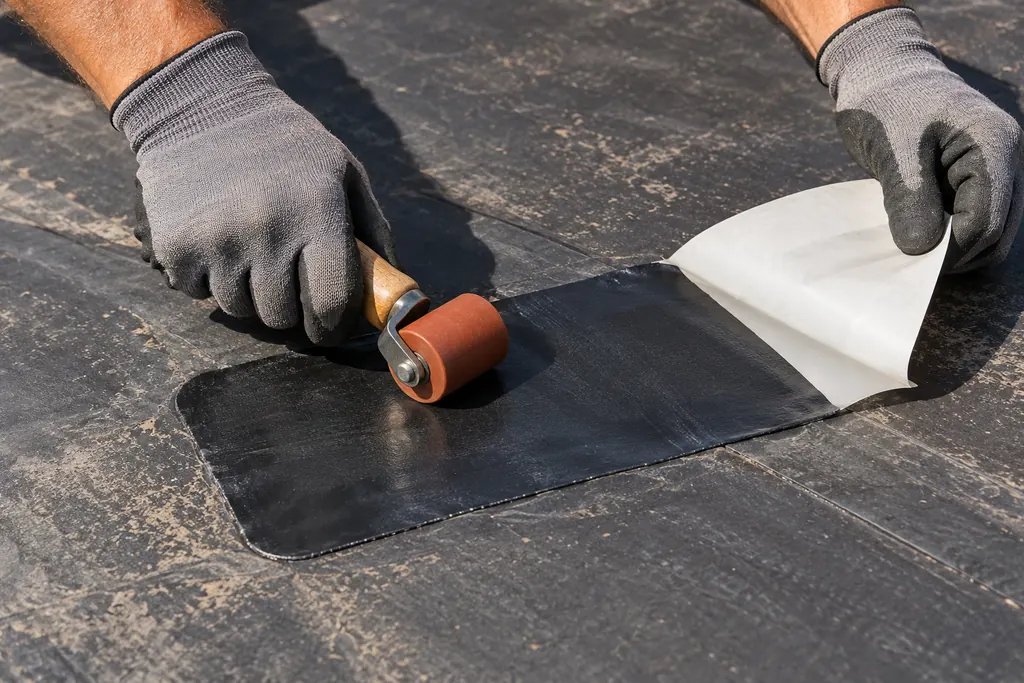
Older rubber roofs with dry insulation can be patched, re-taped, and coated, and new EPDM fits low-slope buildings after a tear-off.
EPDM roofing in Mesa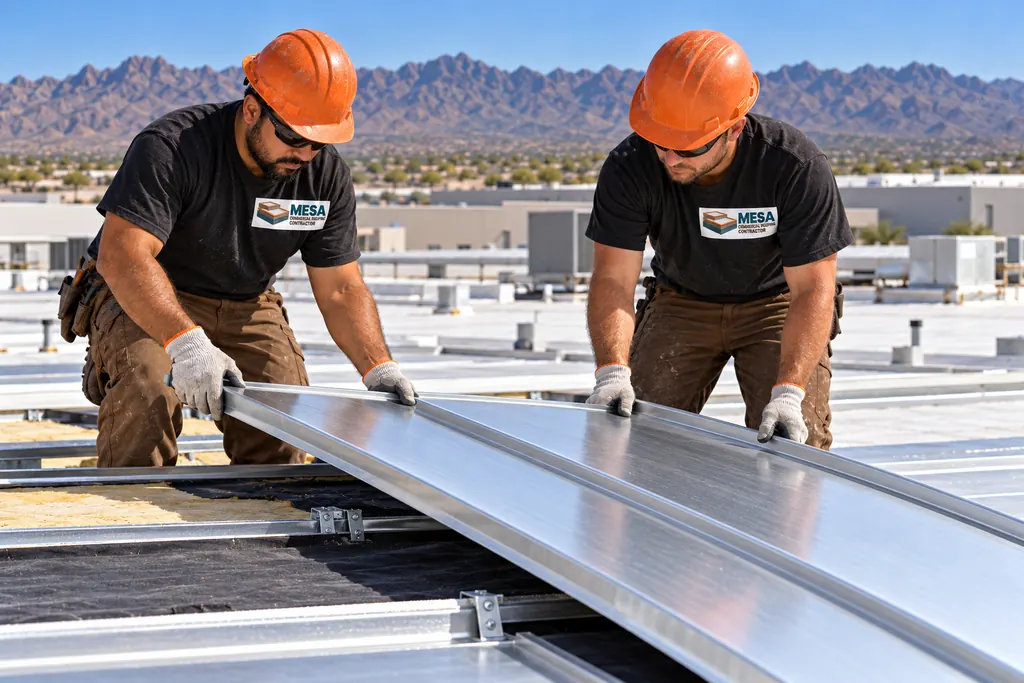
Metal shops and warehouses get new fasteners, sealed laps, and a coating, or new panels where the old ones rusted through.
Commercial metal roofing in MesaCall and tell us the roof age, any recover you know about, and where leaks show inside. We will plan core cuts at the inspection.
Call UsApache Junction Work Sequence
Five steps, starting with what is already on the deck.
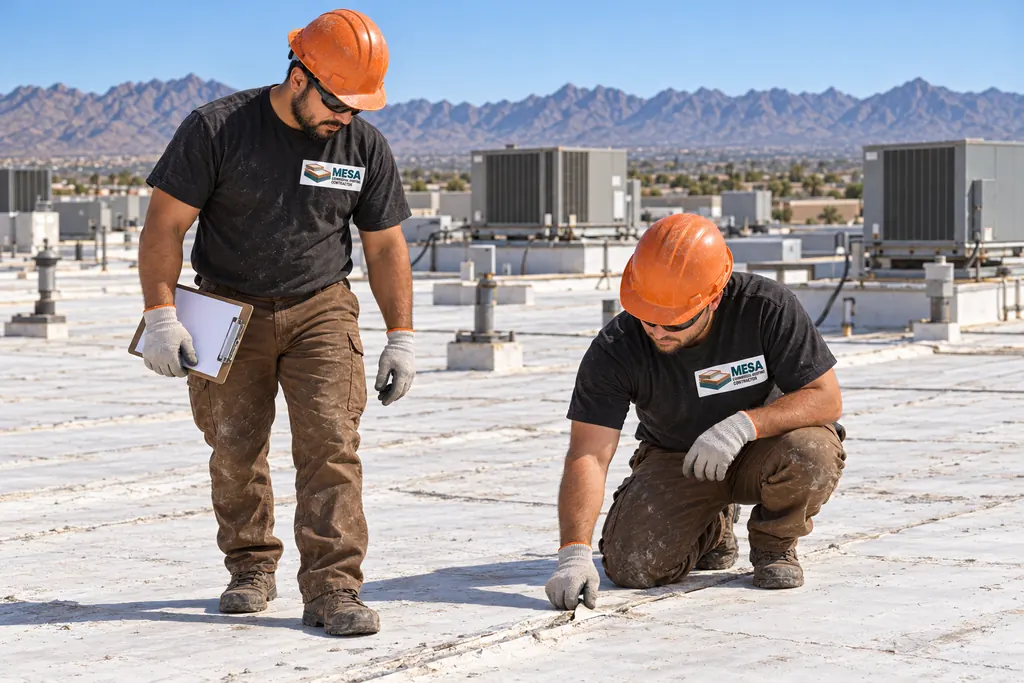 Step 1
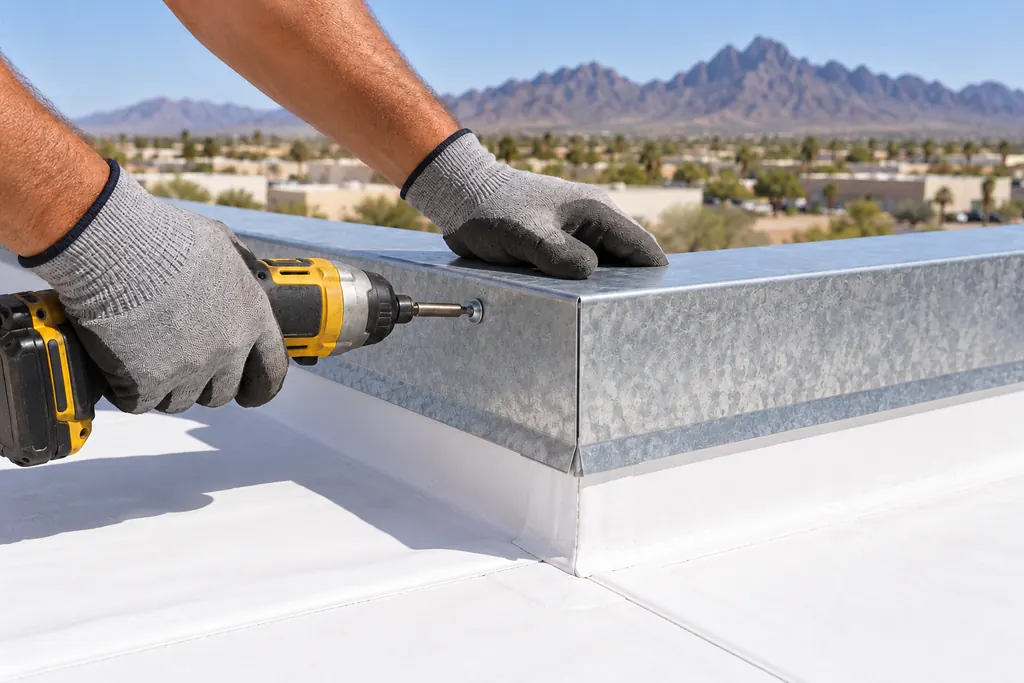 Step 4
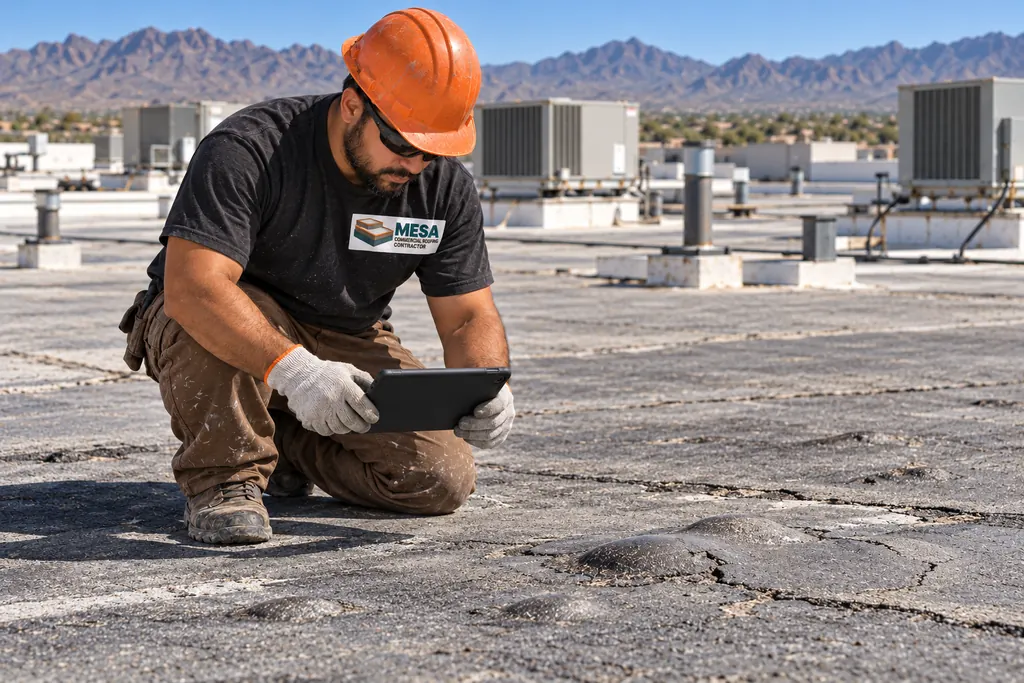
Walking the roof and taking core cuts in several spots shows every existing layer, the insulation condition, and the deck. We photograph each core so you see the layers yourself.
One dry layer with solid deck leaves room for a recover. Two layers, or wet board anywhere between them, means removing everything down to the deck.
Apache Junction issues its own reroof permits, so we confirm the requirements with its Building Safety and Inspection Division before ordering roof material.
Crews strip one section at a time, repair any damaged deck, reset drains to the right height, and dry in each opened area before leaving.
We walk the finished roof with you and leave notes on the layers removed, so the next owner or contractor knows what is up there.
Nearby Areas
Each area around Apache Junction has its own roof concerns and permit office.
Apache Junction Questions
Answers about layered roofs, permits, and repair choices east of Mesa.
Common Question
Repair or restoration makes sense when the deck and insulation are mostly dry and the membrane still has life. A few isolated leaks at flashing or seams point to repair, and a weathered surface over tight seams points to coating or restoration.
Wet insulation across large areas, two roof layers already in place, or rust and rot in the deck point to replacement. An infrared scan or core cut settles the question before money is spent.
A core cut through the roof shows every layer down to the deck, including old gravel, cap sheet, or a membrane hidden under a newer one. We take cores in a few spots, since past repairs sometimes covered only part of the roof.
Two existing layers add weight, trap moisture between them, and leave fasteners for a third layer biting into soft material. On an Apache Junction building with two layers already, the next roof starts by removing both down to the deck.
The City of Apache Junction handles its own permits through the Building Safety and Inspection Division of its Development Services department, separate from the City of Mesa. Permit triggers and fees change, so we confirm requirements with the city before work starts.
Often, if the rubber is still flexible and the insulation is dry. Lifted seam tape gets replaced, splits get cover-tape patches, and a reflective coating goes over the cleaned sheet. A roof with soaked insulation underneath needs that section removed first.
Rust at the laps means water has been sitting between panels, often where fasteners loosened and sealant dried out. Light surface rust gets cleaned, primed, and sealed; panels rusted through at the laps get replaced before any coating.
Only as long as one section takes. Crews remove what they can dry in that day, and every opened area is covered before they leave. Watching the forecast during monsoon season keeps large openings off the calendar when storms are likely.
Enter the roof size and condition for a ballpark figure, or call to book an inspection with core cuts.
Roof Question
Leave a name and number, or call (623) 310-0175 now.