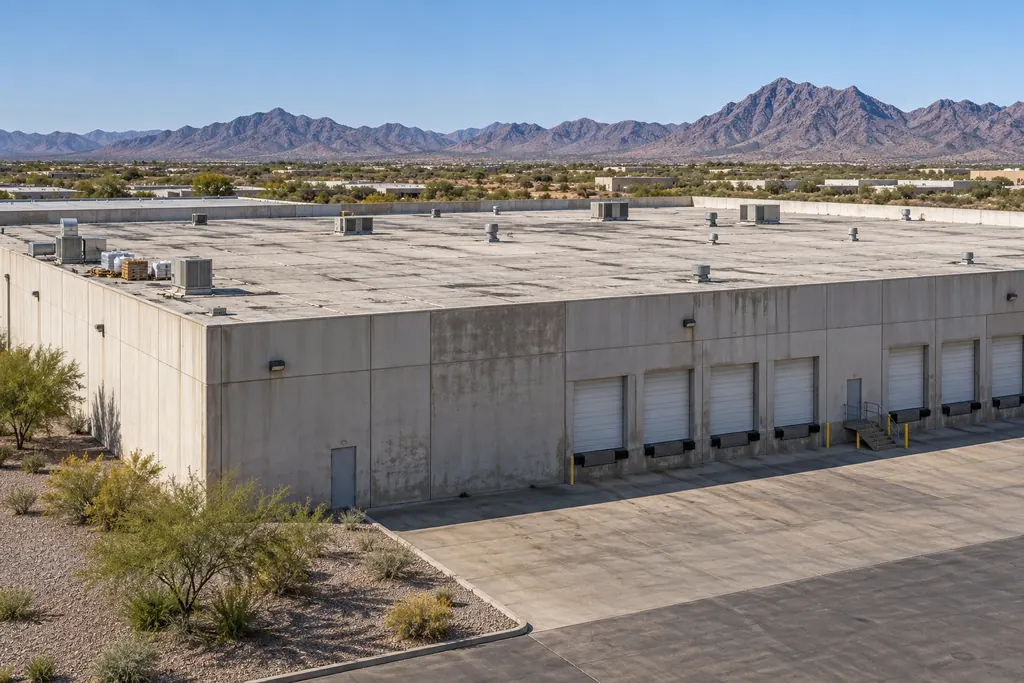
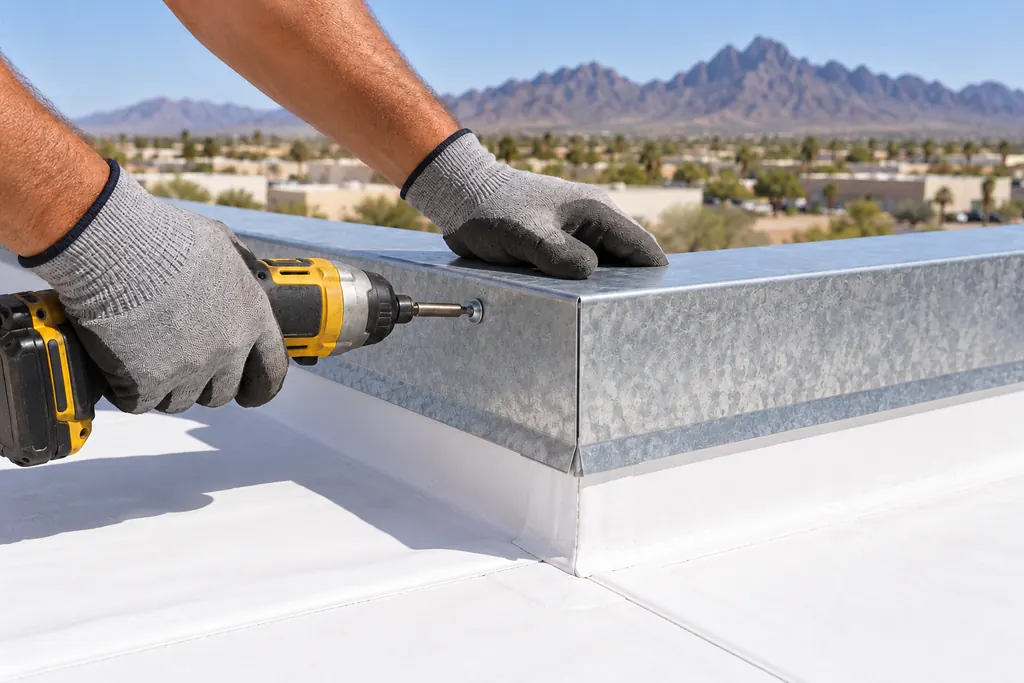
We handle commercial roofing in the Falcon District for aerospace, MRO, and manufacturing buildings, planning every crane lift near Falcon Field around FAA notice rules.
Falcon Field is owned and operated by the City of Mesa, covers 784 acres, and bases more than 800 aircraft. Its main runway is 5,100 feet long, which matters for any roof job nearby that needs a crane.
Federal rules (14 CFR 77.9) call for FAA notice when construction rises above a 100-to-1 surface within 20,000 feet of a runway longer than 3,200 feet, and cranes are not exempt. We check crane height and position against those criteria before scheduling a lift.
Crane height and position checked before lift day
Lift timing set around airfield activity
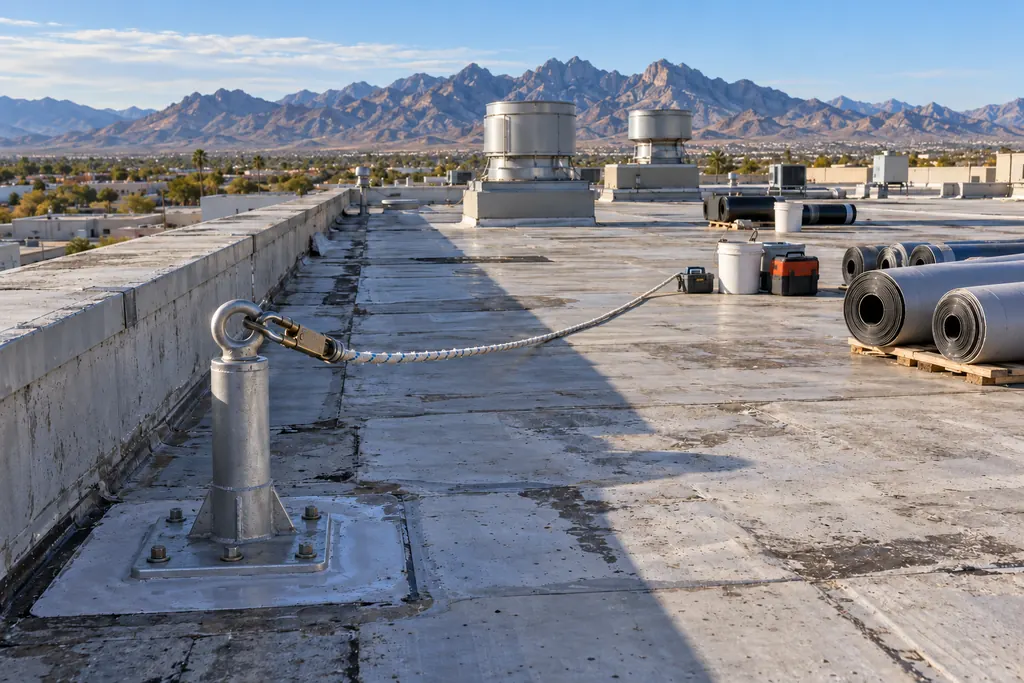
Lifelines and anchors set on wide plant roofs
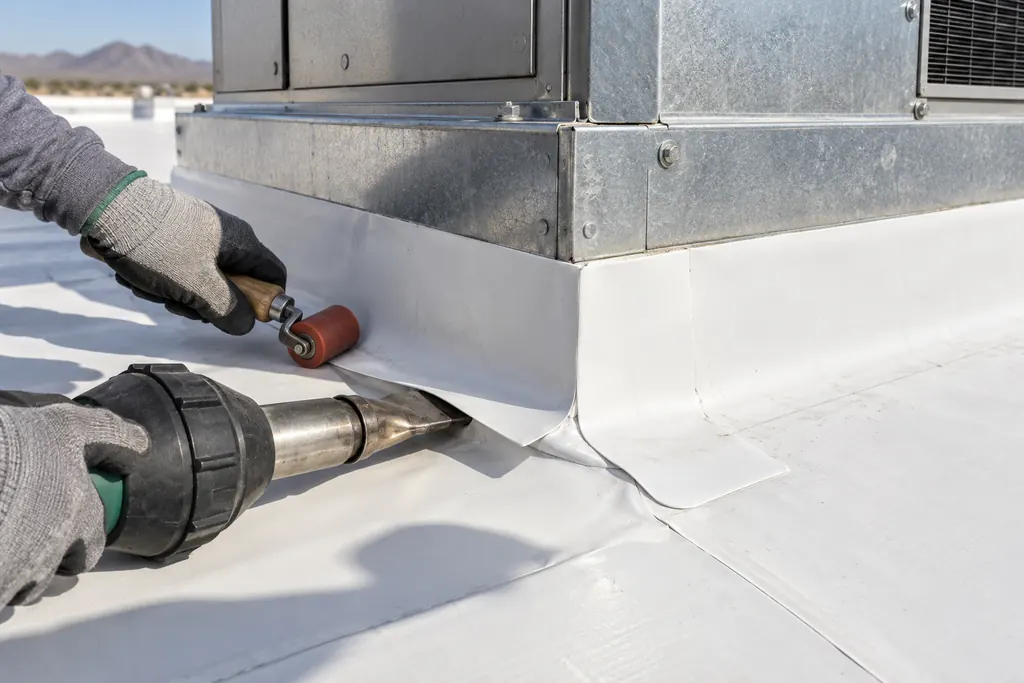
Exhaust and process curbs flashed tight
Plant Roof Conditions
Leak Signs On Aerospace And Plant Roofs
Manufacturing and hangar buildings here carry heavy equipment on wide roofs. Each pair links what crews see inside to the roof detail behind it.
Inside The BuildingOn The Roof
Drips Over Production Floors
Water landing on a work cell or stored parts tends to trace to a fan curb or pipe penetration above.
Exhaust Fan Curbs
Process exhaust fans vibrate and heat their curbs, which cracks sealant and loosens flashing faster than the open roof.
Puddles Under Skylights
Wet floors under skylight wells after storms point to the curb flashing or a cracked skylight frame.
Skylight Curbs
Skylight curbs on plant roofs need tight flashing and fall protection around them, since they sit in the walking path.
Rust On Hangar Steel
Orange streaks on hangar trusses or wall girts show water reaching the frame from the roof above.
Loose Metal Panel Laps
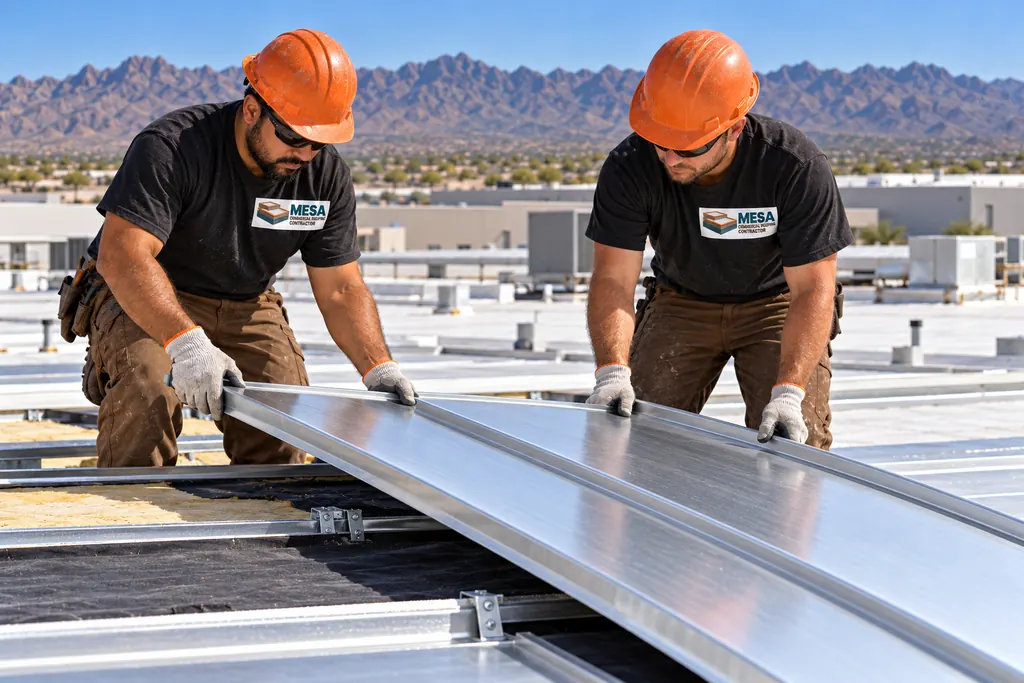
Hangar and shop roofs in metal move with heat, and laps open where fasteners have backed out.
Rattle During Wind Gusts
Loud rattling across a wide span during gusts means a membrane edge or metal trim has loosened.
Lifted Perimeter Metal
Long perimeters on large plant roofs catch wind, and blown-back edge metal lets rain under the sheet.
Ceiling Tile Sag In Offices
Sagging tiles in the front offices of a plant often come from ponding over a clogged roof drain.
Clogged Roof Drains
Wide flat spans carry many drains and scuppers, and one blocked drain can hold water across a large area.
Why It Pays
Roof Gains For Falcon District Property Owners
Plant and hangar roofs in the district carry equipment, foot traffic, and airfield rules. These gains come from planning around all three.
Lifts Planned Before Lift Day
Checking crane height and position against FAA notice criteria during planning keeps a material lift near Falcon Field from turning into a last-minute delay. Lift day then runs on the schedule set with your facility and production staff.
Tight Curbs At Process Fans
New flashing at exhaust fan curbs and process penetrations closes the roof details that leak first on manufacturing buildings.
Production Keeps Running
Phased roof sections let lines and hangar bays keep working below, with opened areas dried in at the end of each shift.
Safer Access For Service Techs
Lifelines, anchors, and walk pads set during the job give HVAC and equipment techs a marked route across the roof.
Systems
Roof Systems We Install In Falcon District
Three systems cover most plant, shop, and hangar roofs in the district.
Industrial Roofing
Wide plant and MRO roofs with fans, process curbs, and many drains, laid in phased sections so work below continues.
Five steps, with the airfield check built in before any material goes up.
Step 1
Step 4
1
Inspect Your Roof
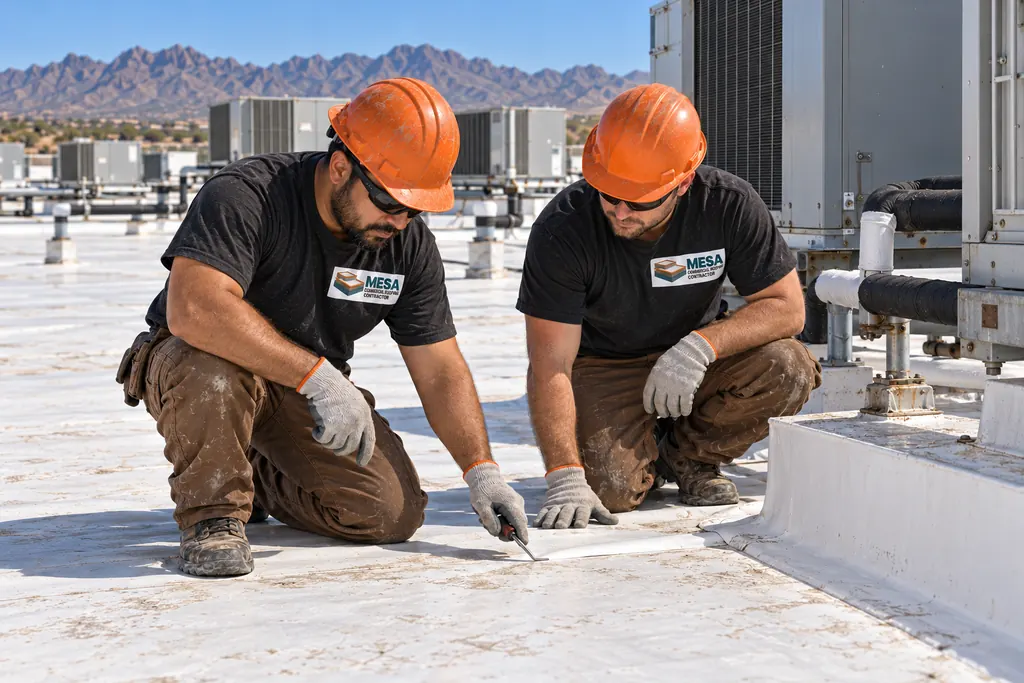
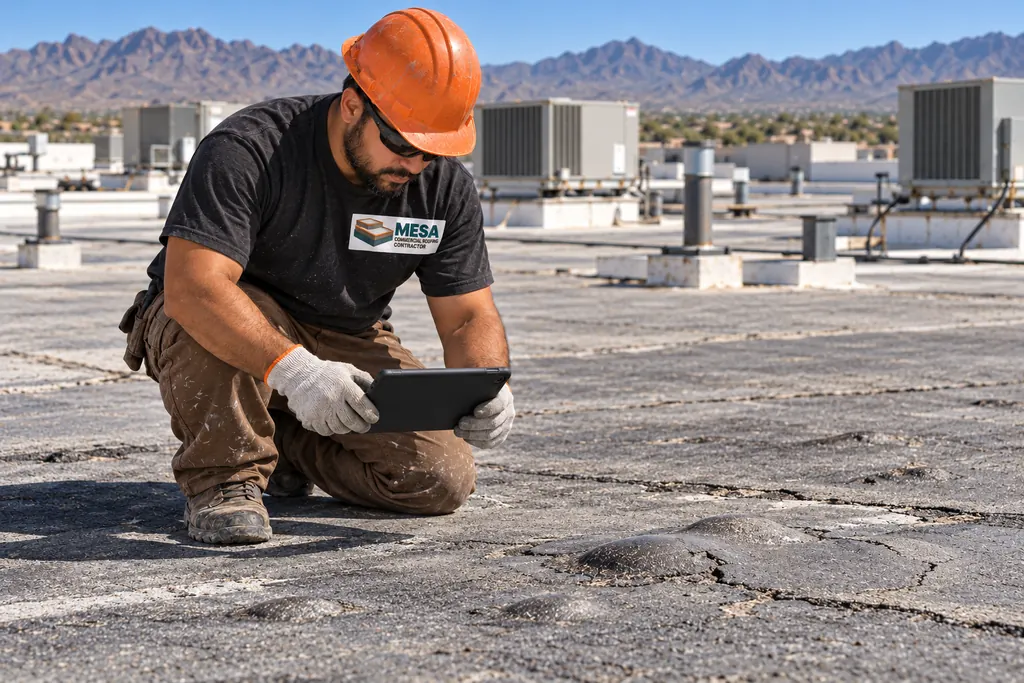
Walking the full span, we check fan and process curbs, skylight flashing, drains, panel laps on hangar roofs, and edge metal. A moisture survey shows which sections hold wet insulation.
2
Repair Or Replace?
Wet board limited to a few bays points to section replacement. Wet insulation across the span, deck rust, or two existing layers point to a full tear-off, phased by section.
3
Check The Lift Against FAA Rules
Crane height, boom position, and distance from the runway are compared with the 14 CFR 77.9 notice criteria before roof material goes up. If notice applies, it is filed, and the lift is scheduled once FAA review allows it.
4
Work In Phased Sections
Each roof section opens, gets new insulation and membrane or panels, and is dried in before the next one starts. Production and hangar schedules set the order.
5
Close Out And Walk The Roof
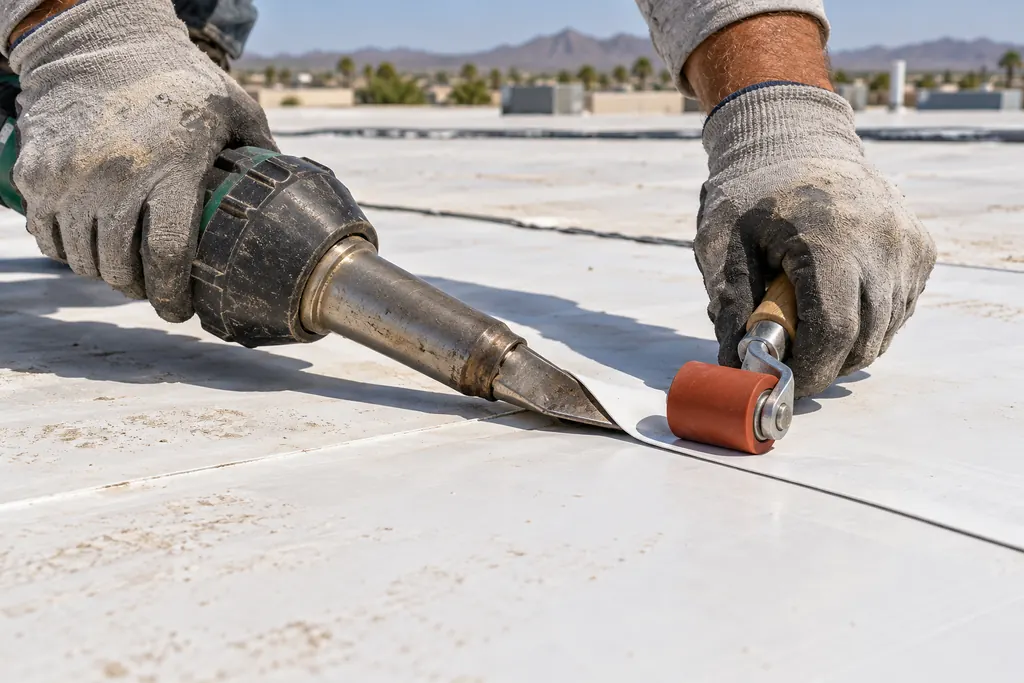
Final checks cover welds, curb flashing, lifelines, and walk pads. We walk the roof with your facility staff and mark the service routes for equipment techs.
The Falcon District sits in north Mesa. These nearby areas each have their own roof conditions.
Apache JunctionEast of Mesa along US 60, where older commercial roofs often carry past recovers that need counting before new work.
Gold CanyonBeyond Apache Junction in Pinal County, with permits through Pinal County Building Safety.
Downtown MesaSouth and west in the city core, with masonry storefronts, parapets, and historic district review.
Fiesta DistrictSouthwest Mesa on US 60, where converted retail and medical buildings add new rooftop units.
Mesa Gateway AreaSoutheast Mesa around the second airport, with secured campuses and large industrial floor plates.
Mesa Riverview DistrictWest along Loop 202, where hotel and retail roofs are scheduled around spring training crowds.
Falcon District Questions
Commercial Roofing Questions For The Falcon District
Answers for plant, hangar, and aerospace building owners near Falcon Field.
Common Question
How Often Should A Plant Roof Near Falcon Field Be Inspected?
Plan on two visits a year, one in spring ahead of the monsoon and one in fall once it ends, and add a visit after any big wind or hail storm.
On plant roofs those visits mean clearing drains and scuppers, resealing fan and pipe penetrations, patching small membrane damage, and checking edge metal. A split seam found in spring is a small repair; the same seam found after a wet summer can mean soaked insulation.
Does Every Roof Job Near Falcon Field Need FAA Notice?
It depends on the equipment and where it stands. Notice applies when construction, including a crane, rises above a 100-to-1 surface within 20,000 feet of a runway longer than 3,200 feet. Ground-level lifts often stay below it, while taller cranes close to the field can exceed it, so we check each lift.
Can Hangar Bays Stay In Use During Roof Work?
In most cases, yes. We phase the roof over the bays, keep material and debris away from aircraft on the ground, and set the work order with your operations staff so bays close only for short windows, if at all.
How Do You Protect Production From Roof Debris?
Opened roof sections sit above areas you have cleared or covered, and tear-off over sensitive spaces happens when those spaces are empty. Debris comes down a chute or in a lift to a fenced drop zone away from doors.
What Do Process Exhaust Fans Do To A Roof?
Heat, vibration, and residue from process exhaust age the membrane and sealant around the curb faster than the open field. We check what the exhaust carries, since some residues call for a membrane rated for that exposure, and flash the curb with that in mind.
Do Metal Hangar Roofs Get Coated Or Replaced?
Either, based on the steel. Panels with loose fasteners and rust only at laps and cut edges can take fastener replacement, lap sealing, and a coating. Panels rusted through, or bent past repair, get replaced with new metal.
Who Issues Reroof Permits In The Falcon District?
The district is inside the City of Mesa, so reroof permits go through City of Mesa Development Services. FAA notice for a crane is a separate federal step, and we track both before the job goes on the schedule.
Get A Free Estimate For Your Plant Roof
Give the roof size and type for a ballpark range, or call to start the inspection and the crane check together.