Drips In Rows
Leaks lined up across a shop ceiling follow the fastener rows on the panels above.
Backed-Out Screws
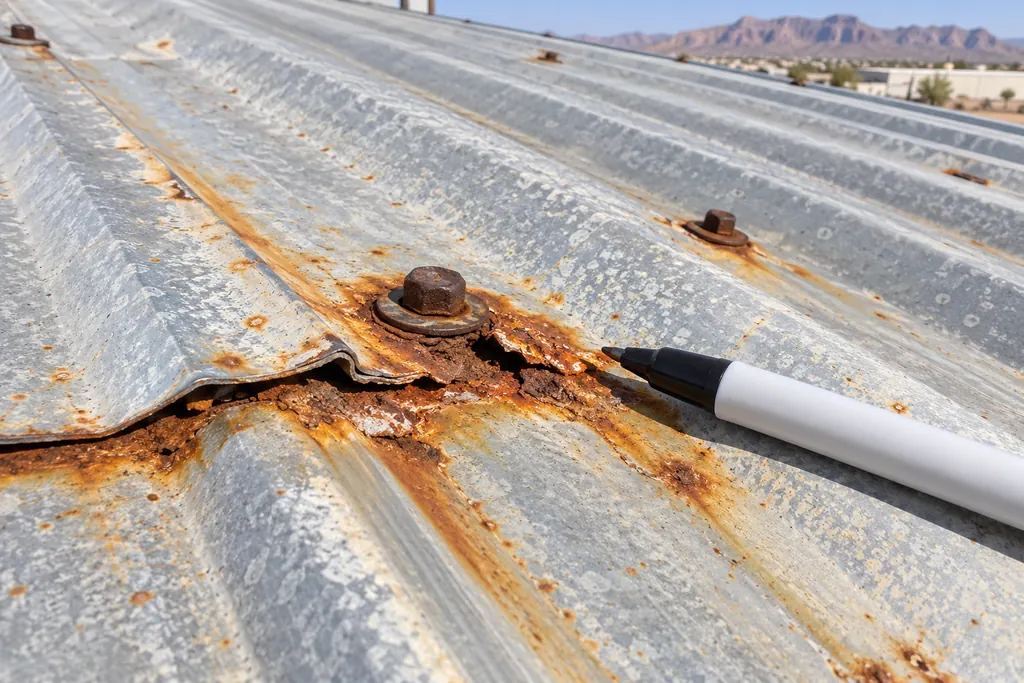
Daily heat movement loosens exposed screws, and cracked washers let water run down each shank.
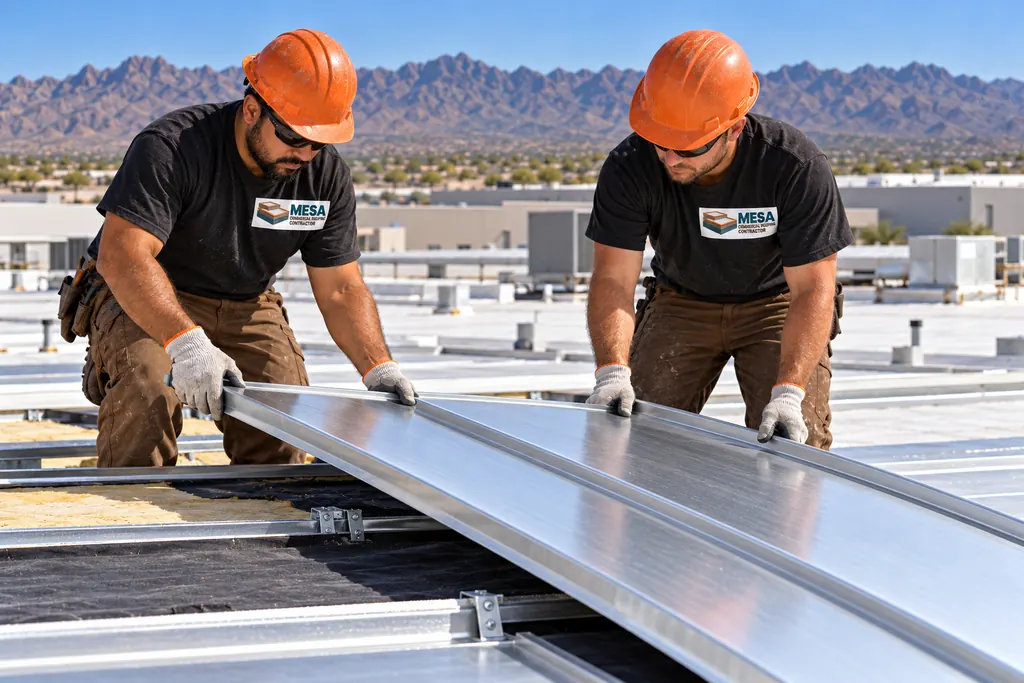
As a commercial metal roofing contractor, we restore, coat, and replace panel roofs on Mesa shops, hangars, and pitched buildings, starting with every fastener and lap.
Fit
Metal suits pitched roofs and many industrial structures in Mesa. The right column lists the cases where another system or more repair comes first.
Metal Roof Conditions
Metal roofs leak at fasteners, laps, and ridges well before the panels wear out. Each pair links the sign indoors to the roof detail behind it.
Leaks lined up across a shop ceiling follow the fastener rows on the panels above.
Daily heat movement loosens exposed screws, and cracked washers let water run down each shank.
Rust stains on framing below a panel lap show water sitting in the lap.
Sealant at panel laps dries out, and bare steel at cut edges rusts first.
Monsoon gusts push rain in along the top of the building.
Foam closures under the ridge cap crumble with sun, opening a gap for wind-driven rain.
Crews working under bare panels feel the heat by midmorning.
Faded finish and thin insulation let the panels pass heat straight into the space below.
Streaks on an outside wall under the roof edge show water missing the gutter.
Eave trim and gutter hangers loosen, and water runs behind the trim onto the wall.
Options
Four ways to handle a metal roof, matched to what the inspection finds.
| Option | When It Fits | What The Work Involves |
|---|---|---|
| Fastener and seal repair | Leaks at screws, laps, and ridges on panels in good shape | Replace screws and washers, reseal laps, new ridge closures and trim |
| Restore and coat | Surface rust, loose fasteners, and solid steel across most panels | Clean, treat rust, prime, seal seams, apply a metal roof coating |
| Panel replacement | Rust-through or bent panels in limited areas | Swap damaged panels, match profile, reseal laps around them |
| New standing-seam roof | Rust-through across large areas or repeated leaks after repairs | Remove old panels, check framing, install standing-seam panels with clips |
Why Metal
These gains depend on panel condition and framing. The inspection sorts out which ones fit your building.
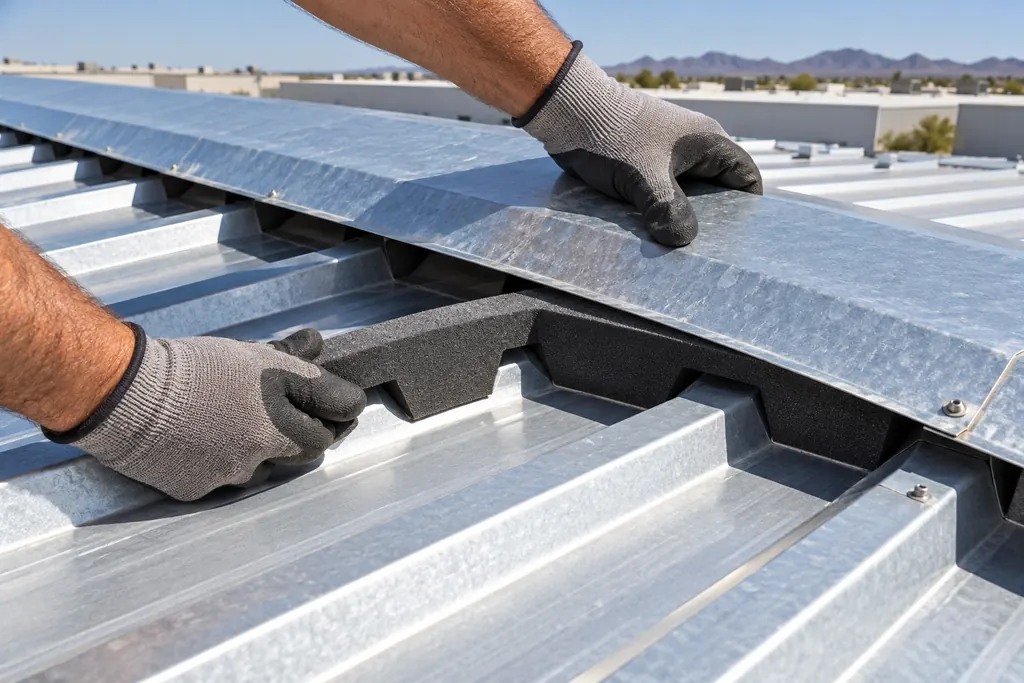
Most metal roof leaks come from a few hundred small openings at screws, laps, and ridge closures. Replacing fasteners, resealing laps, and resetting closures closes those openings across the whole roof, and a coating over the top adds one more continuous layer.
Pitched panels move monsoon rain off the roof quickly, so less water sits against laps and fasteners.
Steel panels keep their shape through summer heat, and a reflective coating lowers the surface temperature on top.
Restoring solid steel puts off the cost and disruption of new panels, while rusted-through spots get replaced as needed.
Call and tell us where the drips line up inside and whether the panels are screwed or standing seam, so we bring the right fasteners.
Call UsMetal Work Sequence
Five decisions carry a metal roof from the first walk to new fasteners, coating, or panels.
 Step 1
 Step 4
Checking every fastener row, lap, ridge, and edge shows how far the rust and loosening have gone. We photograph rust-through, bent panels, and failed closures so you see the worst spots.
Surface rust and solid steel across most panels point to restoration and a coating. Rust-through across large areas, or leaks that return after repairs, point to new panels.
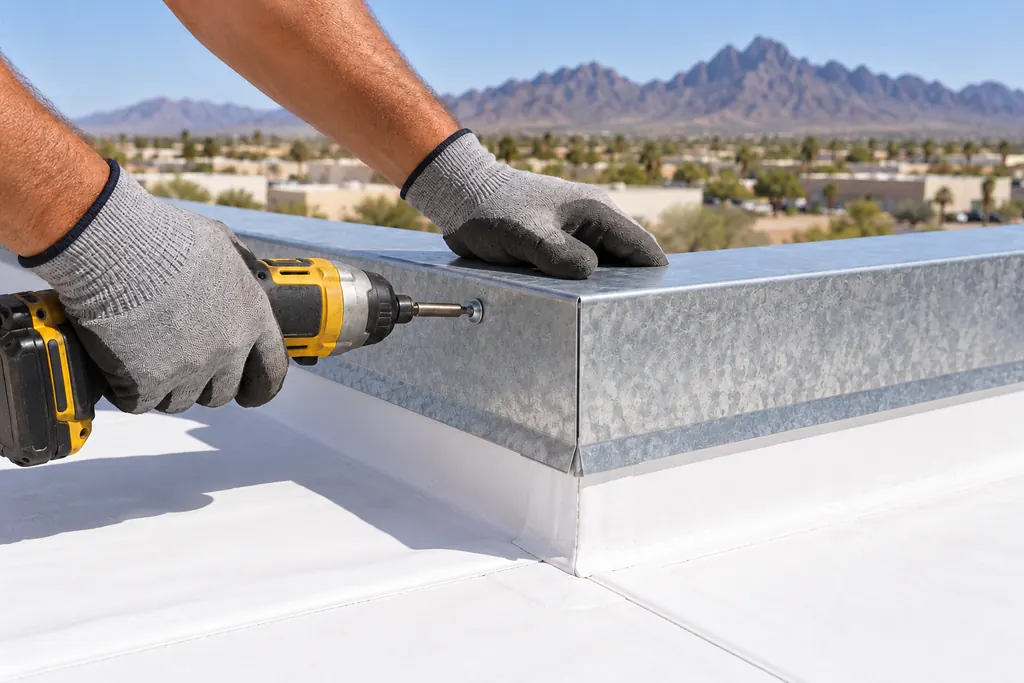
Loose and stripped screws come out and larger ones with new washers go in. Rust is ground or brushed off, bare steel is primed, and laps and seams are sealed.
Metal roof coating goes on in passes over the primed panels, or standing-seam panels are set with clips after the old roof comes off. Ridge caps and trim are reset with new closures.
You walk the roof with us and see the fasteners, laps, and ridge we changed. A yearly check after monsoon season catches loose screws before they leak.
Related Services
Two other services come up often on the same properties as metal roofs.
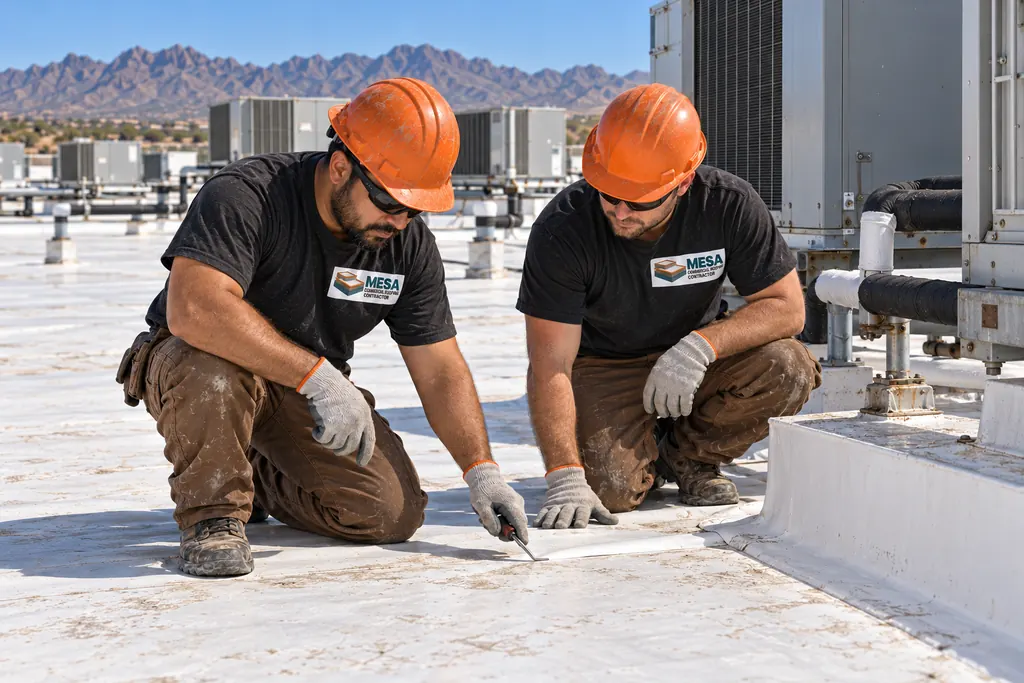
Plants with metal sections and low-slope bays get phased work, fan curb flashing, and lifelines planned as one program.
Industrial roofing in Mesa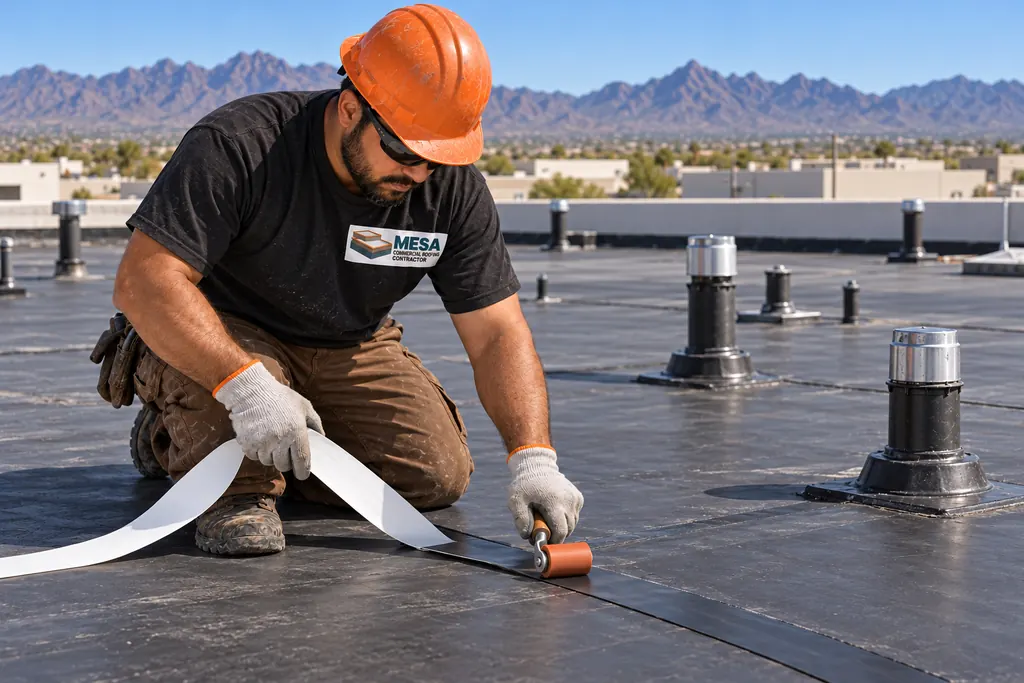
Flat additions and low-slope sections beside a metal building often carry rubber roofs that need seam and boot repair.
EPDM roofing in MesaMetal Questions
Answers about metal roofs on Mesa shops, hangars, and commercial buildings.
Common Question
For pitched commercial roofs, shops, and many industrial buildings, metal is a strong choice. Panels move monsoon rain off fast and hold their shape in summer heat.
The tradeoff is movement: hot days and cooler nights loosen fasteners, dry out lap sealant, and start rust at cut edges. On an older metal roof, new fasteners and a coating can extend its life before new panels are needed.
Steel panels grow on a hot afternoon and shrink overnight, and that movement works exposed screws loose a little each day. Worn rubber washers then let water run down the shank. We replace them with larger-diameter screws and new washers so they bite fresh steel.
Loose rust is wire-brushed or ground off, the bare steel gets a rust-inhibiting primer, and laps and seams are sealed. A coating made for metal then goes over the whole roof. Panels rusted through or bent past repair get replaced before the coating.
Exposed-fastener panels are screwed through the face, so every screw is a possible leak point. Standing-seam panels attach with hidden clips and raised seams, which lets the panel slide as it heats and keeps fasteners out of the water path. Standing seam costs more to install.
Often, yes. Coating works when most panels are solid steel, rust is on the surface, and the structure is in good shape. Each panel is checked first, because a coating over rust-through or loose panels hides the problem for a season and then fails.
Foam closure strips under the ridge cap shrink and crumble with sun, and the ridge fasteners loosen. Wind-driven monsoon rain then blows under the cap. We replace the closures, reset the cap with new fasteners, and seal the laps along the ridge.
Bare metal takes on heat, and older shops with little insulation feel it. A reflective coating lowers the panel surface temperature, and adding insulation during a reroof helps more. We look at both when the space below is cooled or occupied.
Enter the roof size and condition for a ballpark range, or call to have the fasteners, laps, and ridge inspected.
Roof Question
Leave a name and number, or call (623) 310-0175 now.