Leak At A New Unit
Water around a newly set rooftop unit points to curb flashing tied in quickly during build-out.
Rushed Curb Tie-Ins
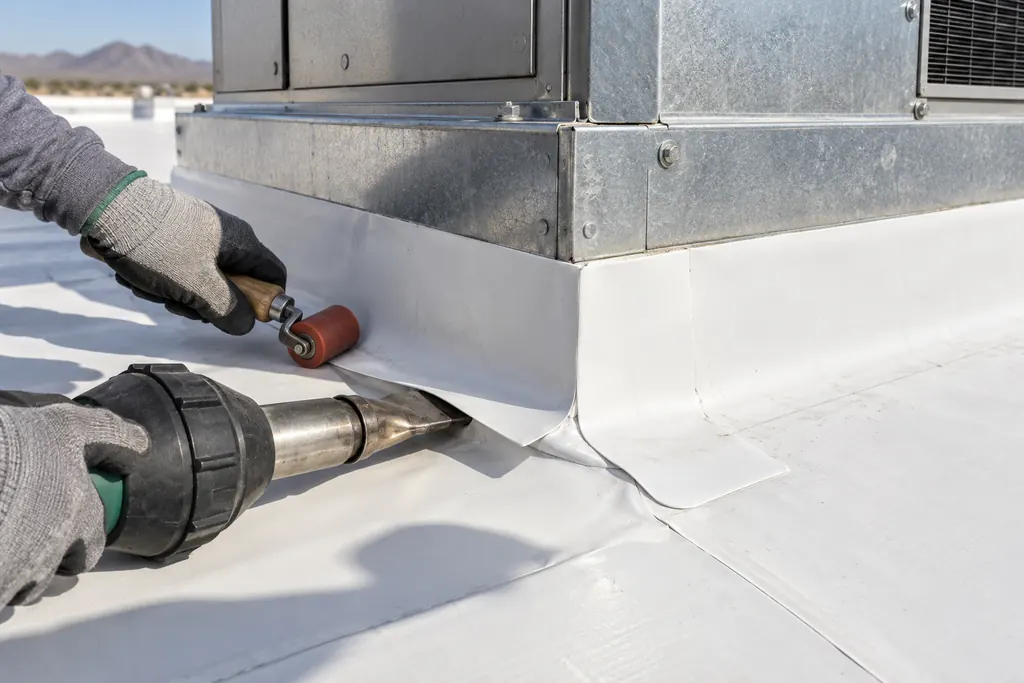
Curbs added for new tenants need flashing welded or taped into the membrane, and hurried tie-ins split first.
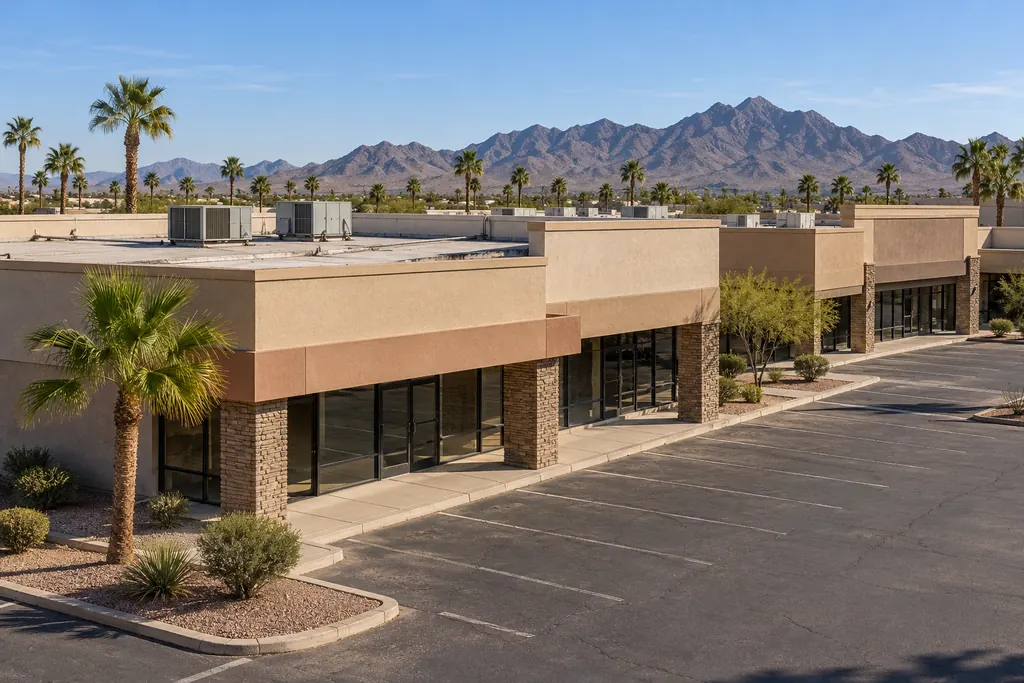
We handle commercial roofing in the Fiesta District for older retail shells and medical or office buildings being converted, roofing new curbs and units in before tenants arrive.
Fiesta District Angle
The Fiesta District sits in central Mesa on US 60 and Loop 101, anchored by Banner Desert Medical Center and Mesa Community College. The former Fiesta Mall site is being redeveloped as the roughly 80-acre Palo District, which the City Council approved on December 1, 2025.
Converting an older retail or office shell usually adds rooftop units, curbs, and penetrations. Reroofing before or during that work saves cutting a new membrane later to set equipment.
Conversion Roof Conditions
Buildings changing use carry old roof problems and new equipment at once. Each pair ties a sign inside to the roof detail behind it.
Water around a newly set rooftop unit points to curb flashing tied in quickly during build-out.
Curbs added for new tenants need flashing welded or taped into the membrane, and hurried tie-ins split first.
Ceiling stains in spaces that were dry before often sit under abandoned curbs or capped penetrations.
Old vents and curbs left behind after a remodel lose their seals and let water in around the base.
A damp smell when old ceilings come down shows insulation has been holding water above them.
Long-running leaks on older retail roofs soak insulation board that a new roof plan has to account for.
Banging overhead in wind above a new tenant space points to loose edge metal or flashing.
Older retail roofs often carry worn edge metal that wind lifts once the building is busy again.
Drips at a storefront canopy point to the scupper or gutter above, often blocked by debris.
Drains on long retail roofs fill with dust and debris during a vacancy, and water backs up toward the walls.
Why It Pays
Conversions open the building anyway. These gains come from roofing it to match its new use.
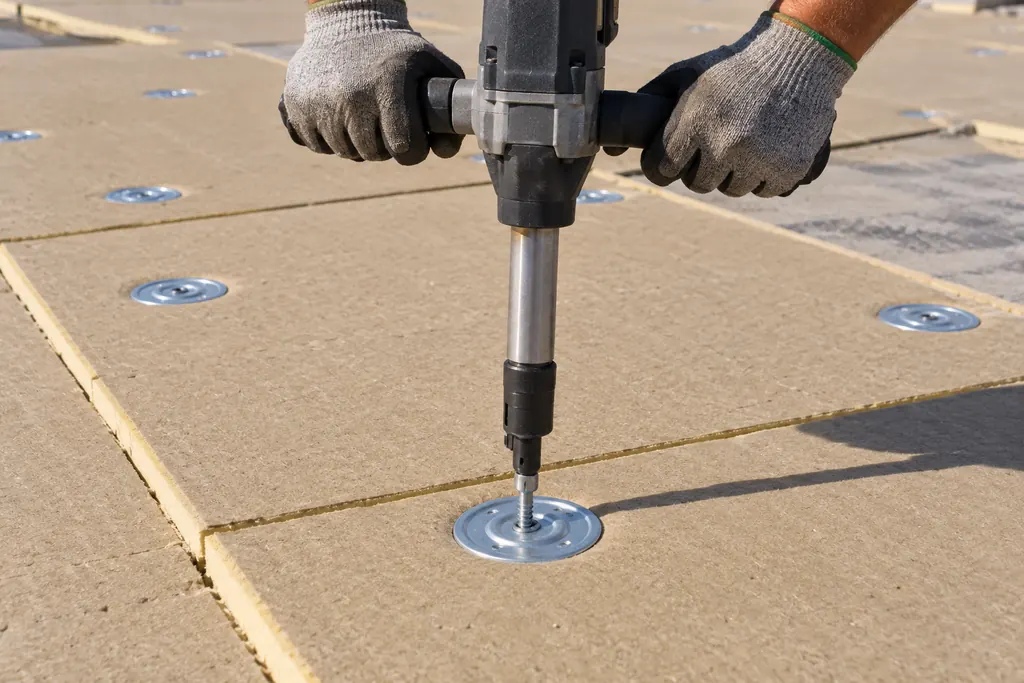
Setting new insulation and membrane around the final unit and curb layout leaves a roof with every penetration flashed once, in its real location. The new tenant starts without old patches and capped holes from a store that left years ago.
New rooftop units sit on curbs flashed into fresh membrane, which removes the most common leak source after a remodel.
Finding and replacing wet insulation during the conversion keeps hidden roof moisture from staining new ceilings later.
Timing roof work with interior construction means new ceilings close up under a dried-in roof.
Systems
Two membrane systems fit most converted retail, office, and medical roofs here.
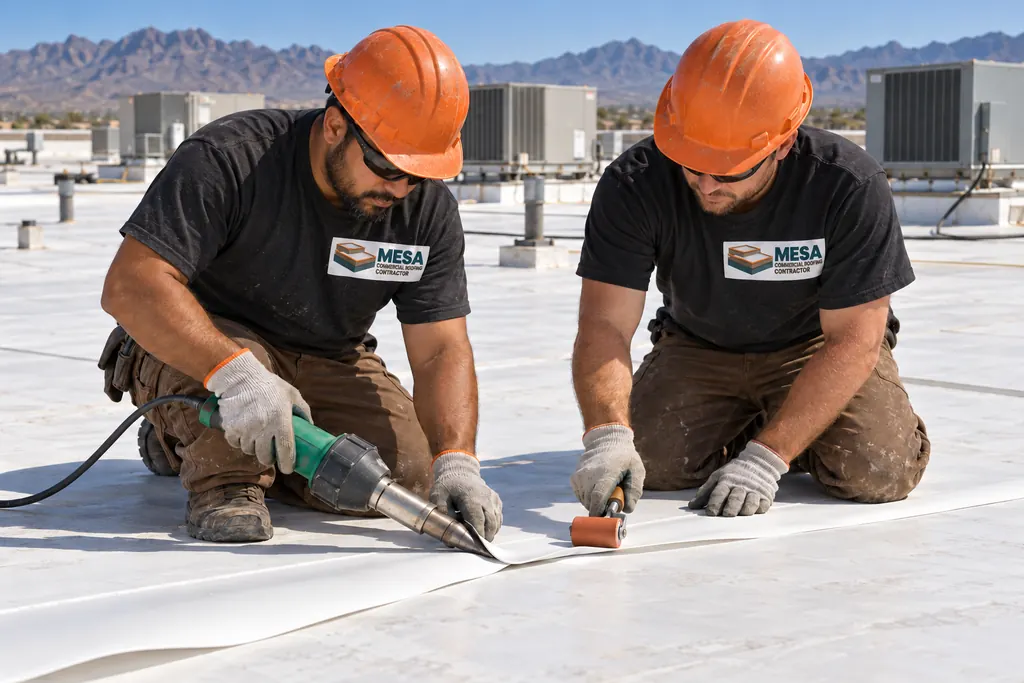
Welded white TPO fits converted buildings with several new rooftop units and cooled interiors, with walk pads leading to each unit.
Best For
Look Elsewhere
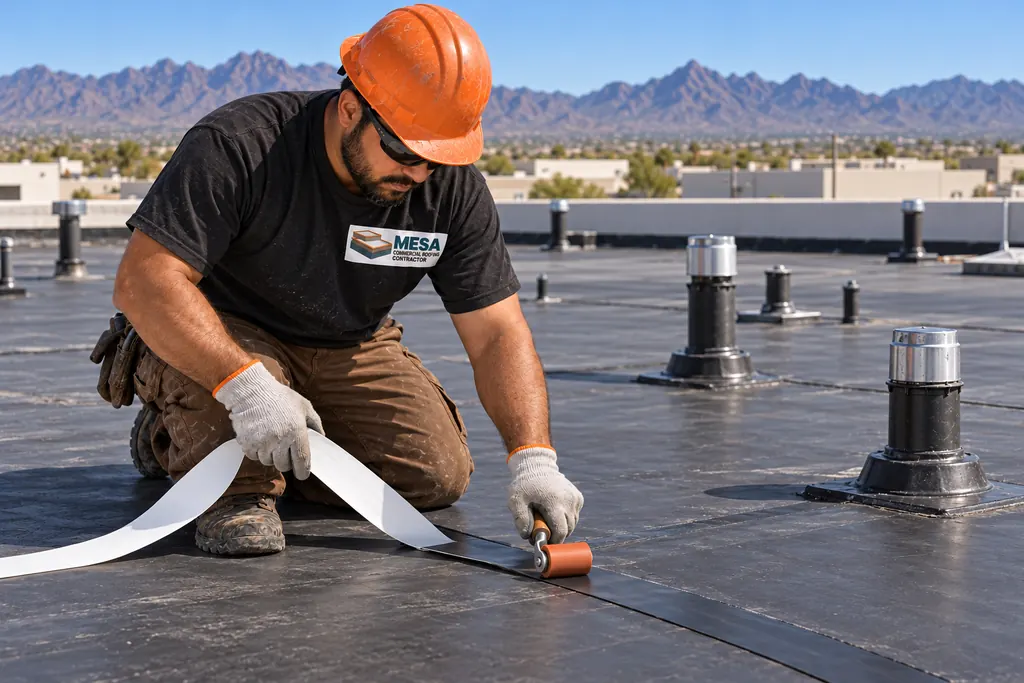
Older retail roofs often carry EPDM already, and a sheet in fair shape can be repaired around the new layout and coated.
Best For
Look Elsewhere
Call before the crane lift or the curb install, and we can plan the flashing and any reroof around the equipment schedule.
Call UsFiesta Work Sequence
Five steps that line up roof work with the conversion schedule.
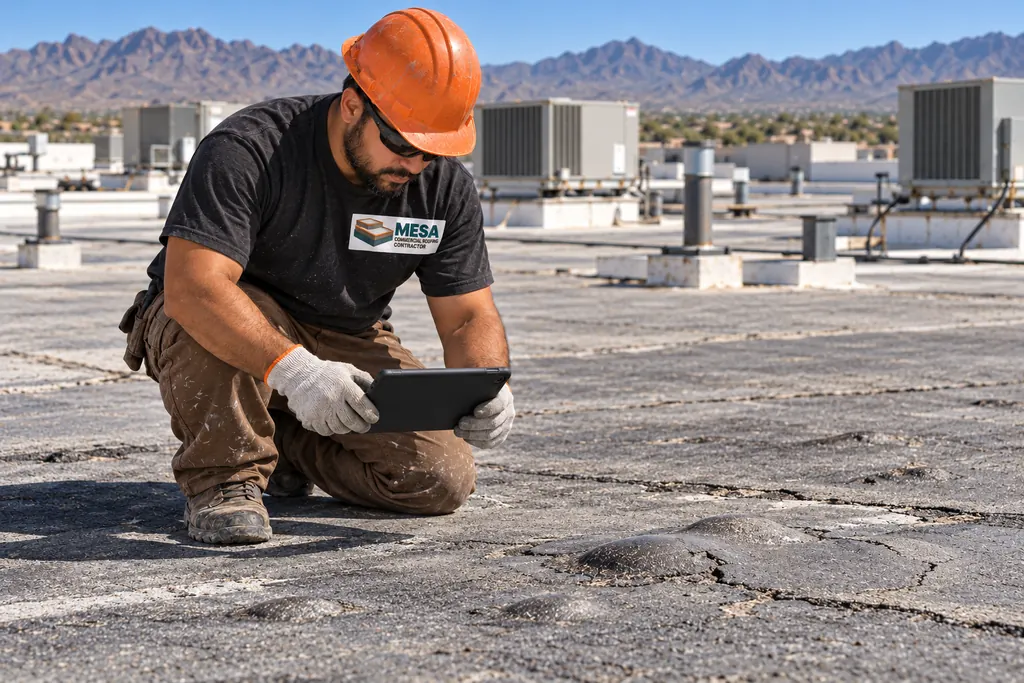 Step 1
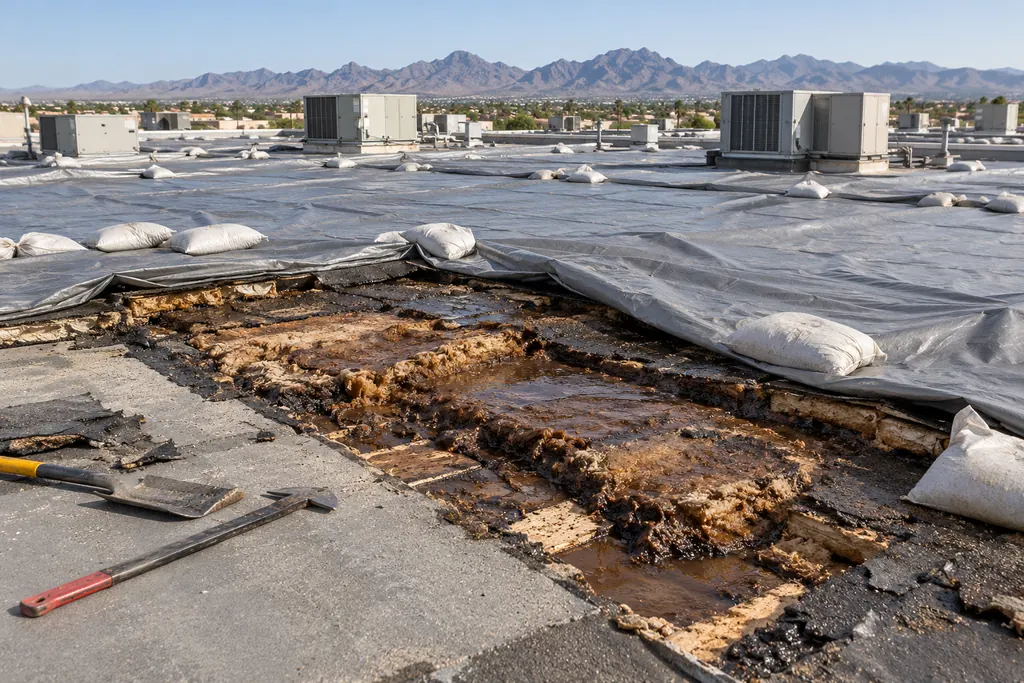 Step 3
Mapping the existing roof comes first: old curbs, capped vents, seams, drains, and edge metal, plus a moisture check across the field to find wet insulation left from earlier leaks.
Using the mechanical plan for the new use, we mark where units, curbs, vents, and walk pads will land, so new penetrations go through new membrane in the right spots.
Dry insulation and one layer favor a recover with new curbs flashed in. Wet board across the roof, or two existing layers, means a tear-off to the deck first.
Roof sections close up before ceilings go in below, and abandoned curbs are removed and decked over. Each opened section is dried in before the crew leaves.
Curb flashing, walk pads, and drains get a last check once units are running, and we walk the roof with the owner and the tenant’s facility contact.
Nearby Areas
The Fiesta District sits in southwest-central Mesa. These areas each bring their own roof conditions and permit path.
Fiesta District Questions
Answers for owners converting or re-tenanting older buildings in the district.
Common Question
In most cases, yes. Work runs in roof sections, so tenants, patients, and shoppers keep using the building below.
Crews start early to beat the afternoon heat, keep material away from entries and docks, and agree HVAC shutdowns and odor-producing work with your building manager. Each opened section is dried in daily, which keeps the space protected overnight and ahead of monsoon storms.
Before, or during, when the old roof has wet insulation or little life left. Setting new units on a failing roof means cutting the new membrane later to reach them. When the existing roof is dry with years left, new curbs can be flashed into it instead.
Abandoned curbs and vents are a common leak source on converted buildings. We remove them, deck over the opening, and patch the insulation and membrane so the roof reads as one surface again.
They need careful scheduling. Odor-producing work stays away from fresh-air intakes while patients and staff are inside, and HVAC shutdowns are set with the facility team so treatment areas keep their air supply.
The district is inside the City of Mesa, so reroof permits go through City of Mesa Development Services. A conversion with new rooftop equipment can also involve mechanical permits, which your general contractor or HVAC contractor handles.
Sometimes. A recover works over one existing layer with dry insulation and a deck that holds fasteners. Many older retail roofs already carry two layers or hidden wet board, and those need a tear-off, which the moisture survey settles.
We set a shared schedule with the general contractor: when roof sections open, when units get lifted, and when ceilings can close. Roof access, hoisting, and debris drop zones are agreed in advance so both crews work the building without blocking each other.
Send the roof size and condition for a ballpark range, or call to plan the roof around your build-out.
Roof Question
Leave a name and number, or call (623) 310-0175 now.