Leak Along A Straight Line
Drips that follow a straight path across the ceiling usually trace a lap seam running above them.
Lifted Seam Tape
Heat dries out old splice adhesive and tape, and the lap edge curls up enough to take in water.
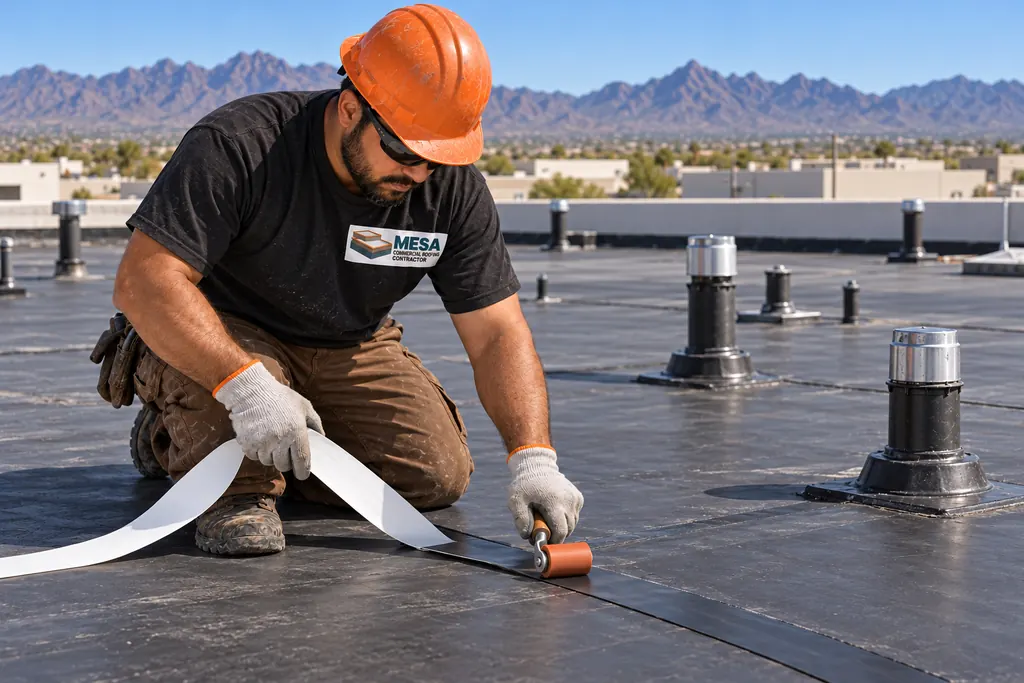
As an EPDM roofing contractor, we repair, coat, and replace rubber roofs on Mesa strip centers and flex buildings, starting with every seam and pipe boot.
Fit
EPDM earns its place on roofs that move and on rubber roofs with years left. The right column lists cases where a different plan comes first.
EPDM Roof Conditions
Rubber roofs fail at laps, boots, and edges long before the open sheet wears through. Each pair ties an indoor sign to the roof detail behind it.
Drips that follow a straight path across the ceiling usually trace a lap seam running above them.
Heat dries out old splice adhesive and tape, and the lap edge curls up enough to take in water.
Stains grouped around plumbing walls point to the vent stacks overhead.
Molded boots split where the rubber meets the pipe, and clamps loosen as the sheet moves.
Moisture on an upper wall near the roof edge shows water getting behind the base flashing.
Older EPDM shrinks and bridges across the corner where deck meets wall, pulling flashing loose.
Top-floor tenants on a black rubber roof notice the heat first in June and July.
Dark sheet absorbs sun all day, which adds heat to the space below the roof deck.
New drips after hail mean the ice punctured or bruised weathered rubber.
Aged EPDM loses stretch, so hail and dropped tools leave small holes that grow with each storm.
Options
Four paths for a rubber roof, matched to what the inspection finds.
| Option | When It Fits | What The Work Involves |
|---|---|---|
| Seam and boot repair | A few open laps or cracked boots on a roof with life left | Clean and prime, new seam tape, new molded boots and clamps |
| Repair and coat | Dry insulation, a sheet with stretch left, and heat on the floor below | Wash, tape seams, cut out wet spots, prime, apply a reflective EPDM coating |
| White-surfaced section | One damaged area on a larger roof that stays in place | Remove the section, new insulation where wet, white-on-black EPDM spliced in |
| Tear-off and replace | Wet insulation across large areas, two layers, or a brittle sheet | Remove to the deck, repair the deck, new insulation and membrane |
Why EPDM
These gains depend on dry insulation and a sheet that still stretches. The inspection tells us whether your rubber roof qualifies.
Many older strip centers and flex buildings in Mesa sit under rubber roofs with years left in the sheet. Taping the seams, replacing boots, and adding a reflective coating keeps that roof working and puts off the cost and disruption of tearing it off.
Rubber flashing wraps vent stacks, pipe clusters, and odd curbs without stiff corners, which helps on roofs crowded with tenant equipment.
Coating black EPDM white cuts the heat the sheet absorbs, which can ease the load on cooling for top-floor suites.
EPDM stretches as a deck expands on hot afternoons and shrinks overnight, so the field of the sheet rides out daily movement.
Call and tell us which tenant space shows water and what vents or pipes sit above it, so the inspection starts at those boots and laps.
Call UsEPDM Work Sequence
Five decisions take a rubber roof from inspection to a closed, coated, or new sheet.
 Step 1
 Step 3
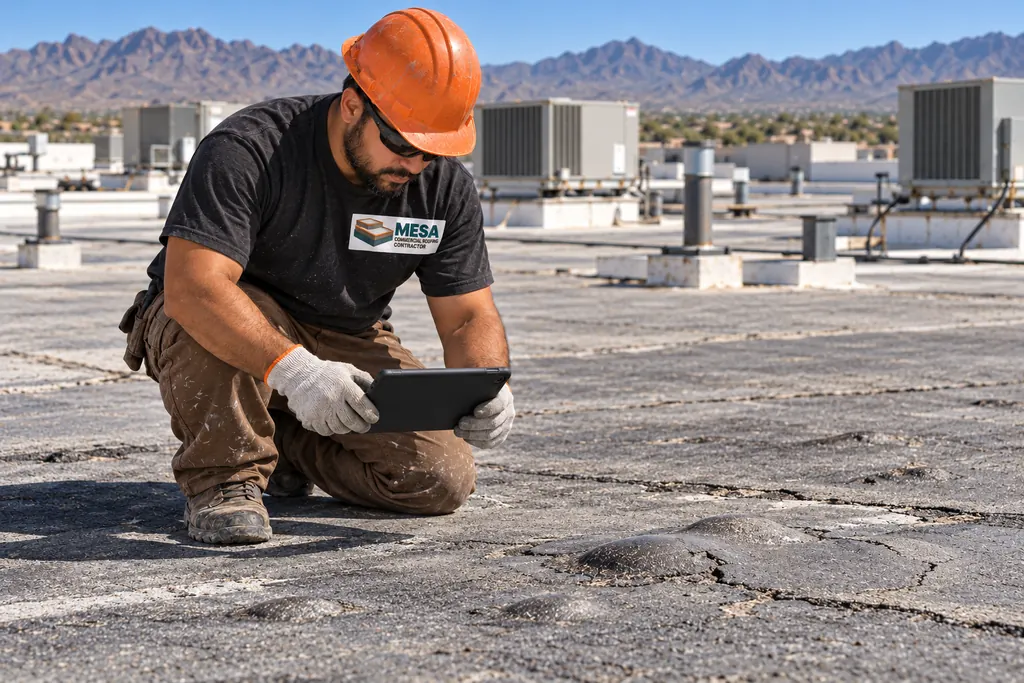
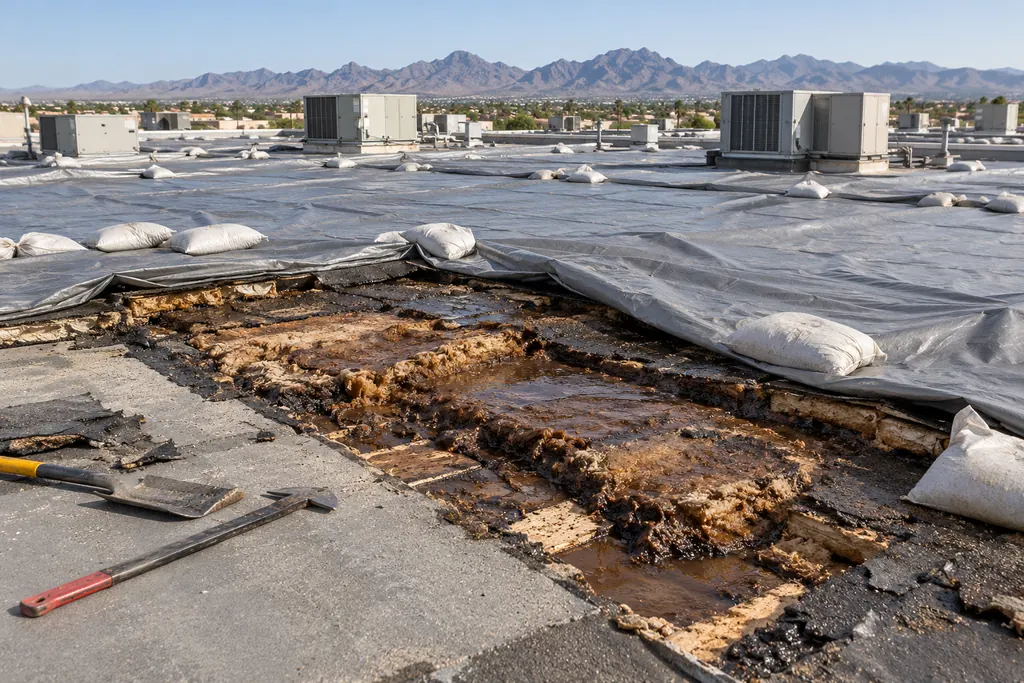
Pulling at lap edges and boot collars shows which seams have let go, and a moisture check marks wet insulation. We photograph shrinkage at walls so you see the stressed corners too.
Stretch left in the rubber and dry board under most of the roof point to repair and coating. A brittle sheet or widespread wet insulation points to a tear-off.
Washing removes dust and chalk so tape and primer bond. Open laps get new seam tape, boots get replaced, and wet spots are cut out and patched before anything goes on top.
Reflective EPDM coating goes on in passes across the primed field, or a new white-surfaced sheet is spliced in where a section was replaced. Opened areas are dried in each evening.
You walk the finished roof with us and see each repaired lap and boot. A spring and fall check keeps drains clear and catches tape edges before they lift again.
Related Services
Two other systems come up when a rubber roof reaches the end of its life.
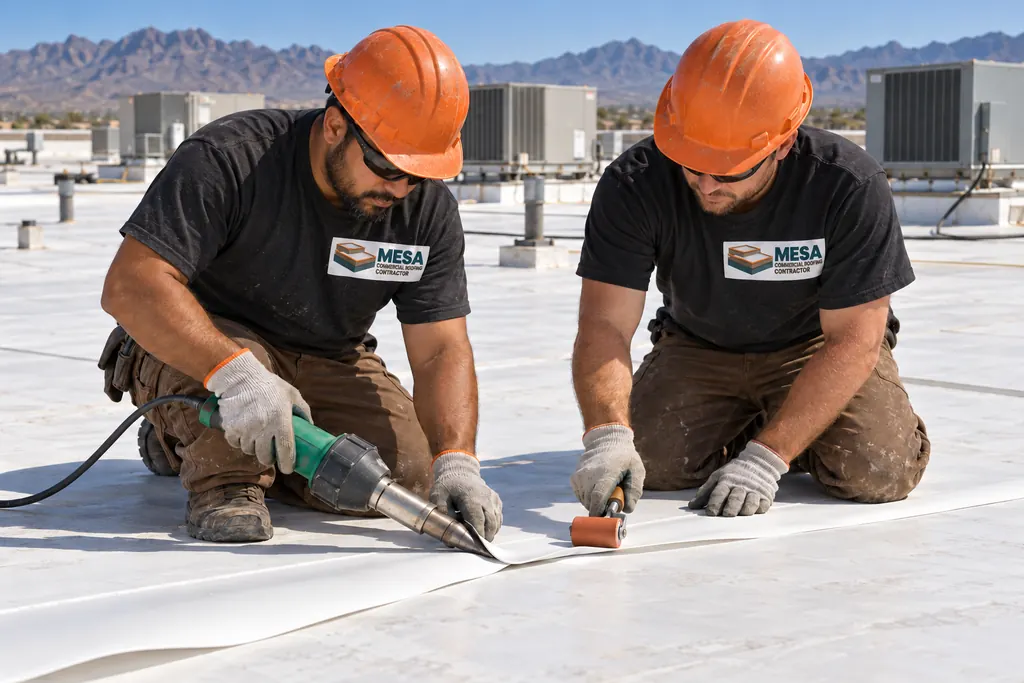
Heat-welded TPO replaces a worn-out rubber roof on many retail and office buildings, with a white surface and welded seams in place of taped laps.
TPO roofing in Mesa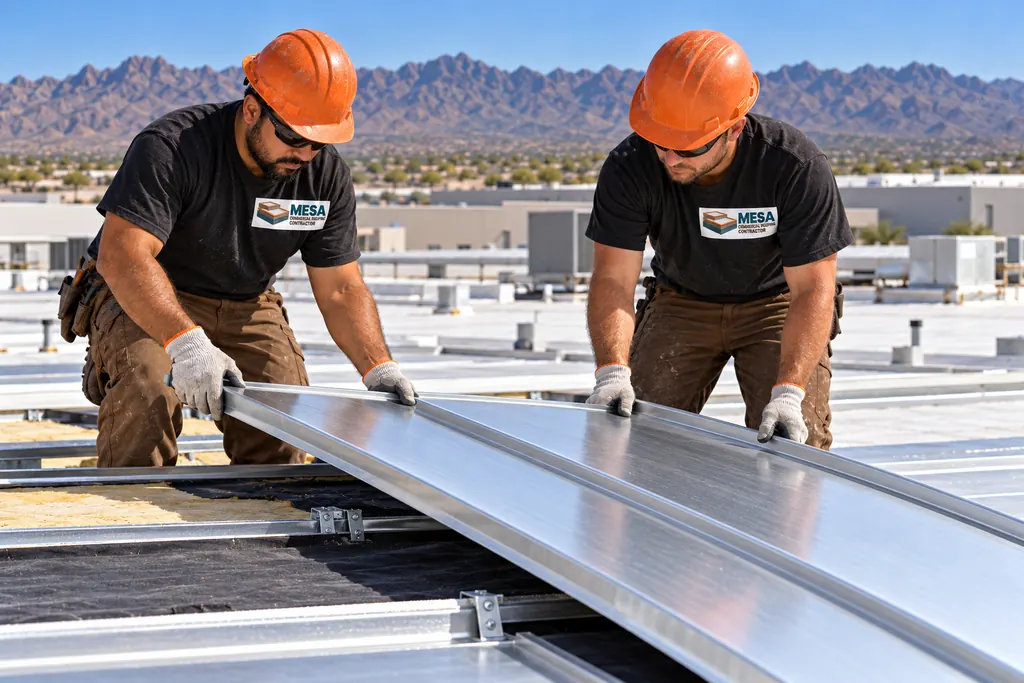
Low-slope flex buildings with enough pitch sometimes move to standing-seam metal, which sheds monsoon rain fast and handles heat.
Commercial metal roofing in MesaEPDM Questions
Answers about rubber roofs on Mesa commercial buildings.
Common Question
EPDM fits a roof that moves, carries odd penetrations, or already has a rubber system in fair shape. The sheet stays flexible and has a long track record on low-slope decks.
Black EPDM soaks up heat under the Mesa sun, so we often pair it with a reflective coating or a white-surfaced sheet. That approach suits older strip centers and flex buildings that are not ready for a tear-off.
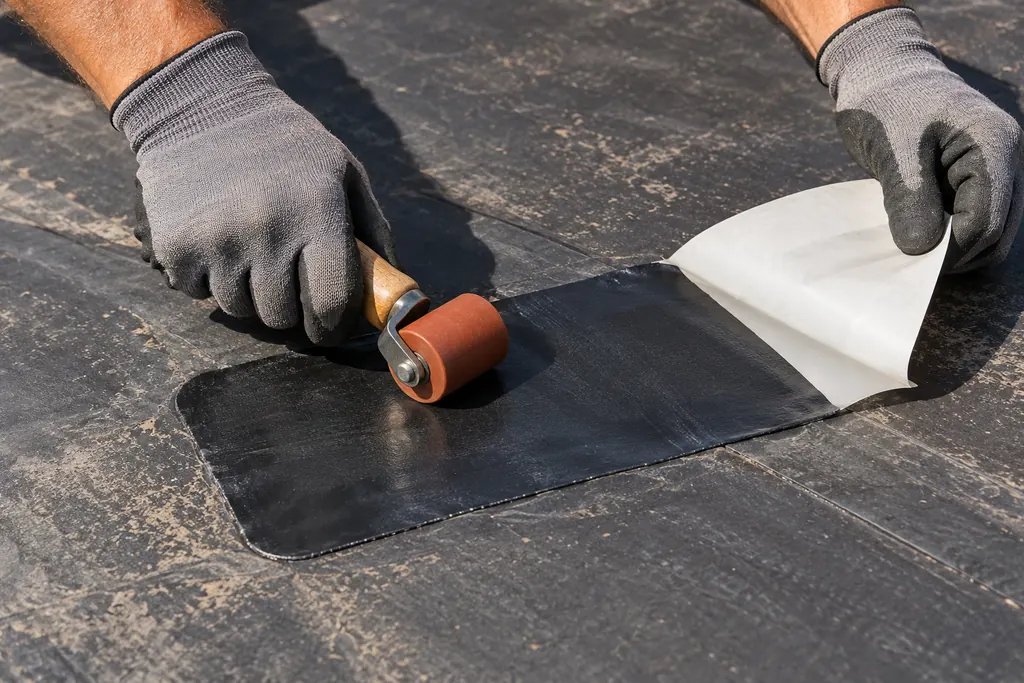
Lifted laps get cleaned back to bare rubber, primed, and closed with new seam tape pressed down with a hand roller. Where the old adhesive has failed along a long run, we cover the whole lap with a wider strip of cover tape so water has no path into the seam.
A coating made for EPDM, applied over a primer that bonds to the rubber. Before any coating, the sheet is washed, open seams are taped, and wet insulation is cut out, because a coating seals the surface and holds in whatever moisture sits below it.
Rubber stretches around odd shapes, so pipe boots, vent stacks, and pitch pockets on crowded strip-center roofs flash cleanly with molded EPDM parts and cover tape. Each penetration still gets its own check, since cracked boots are one of the most common leak points we find.
Older sheets shrink with years of sun, which pulls the rubber away from walls and curbs and leaves bridged corners. Wrinkles near seams can also mean the adhesive below has let go. We add strips at stressed edges or reattach the sheet before the shrinkage tears a lap.
Yes. White-on-black EPDM has a reflective top layer laminated to the rubber at the factory. It makes sense on a replacement or a large section, while a field-applied coating fits a sheet that stays in place and still has life left.
Each spring and fall, plus after a major storm. On rubber roofs we look closely at seam edges, pipe boots, and the flashing at walls, since those details dry out first, and we clear drains so standing water has no time to work into a weak lap.
Give us the roof size and condition for a ballpark range, or call to have the seams and boots inspected.
Roof Question
Leave a name and number, or call (623) 310-0175 now.