Water Down An Inside Wall
Streaks running down a brick wall inside, below the roofline, tend to trace back to the parapet above.
Open Coping Joints
Coping stones or metal caps with open joints let rain into the wall cavity behind the base flashing.
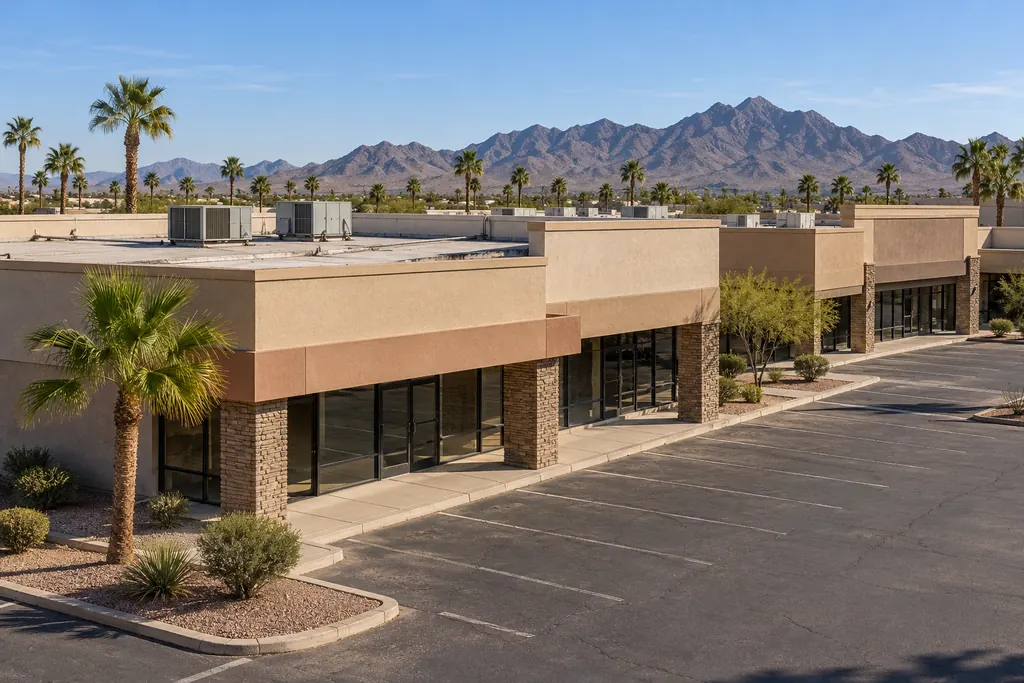
We handle commercial roofing in Downtown Mesa for masonry storefronts and older buildings behind parapets, planning coping, scupper, and historic review details before work starts.
Downtown Angle
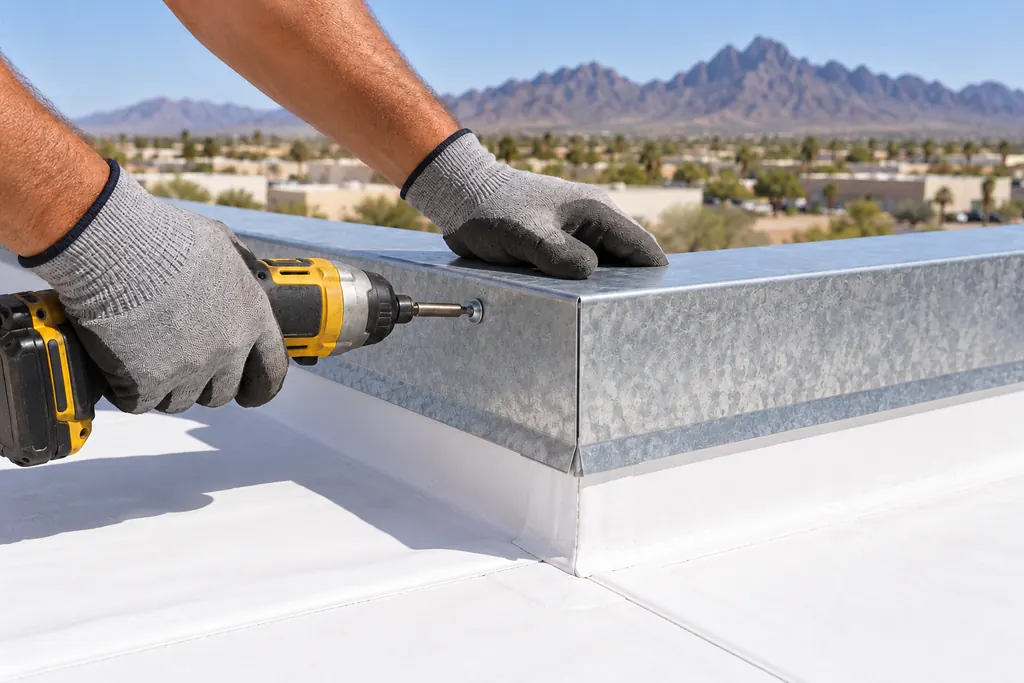
Downtown storefronts often share walls and sit behind masonry parapets, so the roof edge is a wall with coping on top and scuppers cut through it. Water leaves through those openings, and most leaks start where the membrane turns up the parapet.
Mesa has eight locally designated historic districts, several close to downtown. Visible roof changes on a designated building go through the city’s Certificate of Appropriateness review, so we check with the Mesa Historic Preservation Office before choosing materials.
Downtown Roof Conditions
Older masonry buildings show roof trouble in their own way. Each pair connects a sign inside with the parapet or roof detail behind it.
Streaks running down a brick wall inside, below the roofline, tend to trace back to the parapet above.
Coping stones or metal caps with open joints let rain into the wall cavity behind the base flashing.
Ceiling stains near the street side often appear where the roof drains toward a scupper.
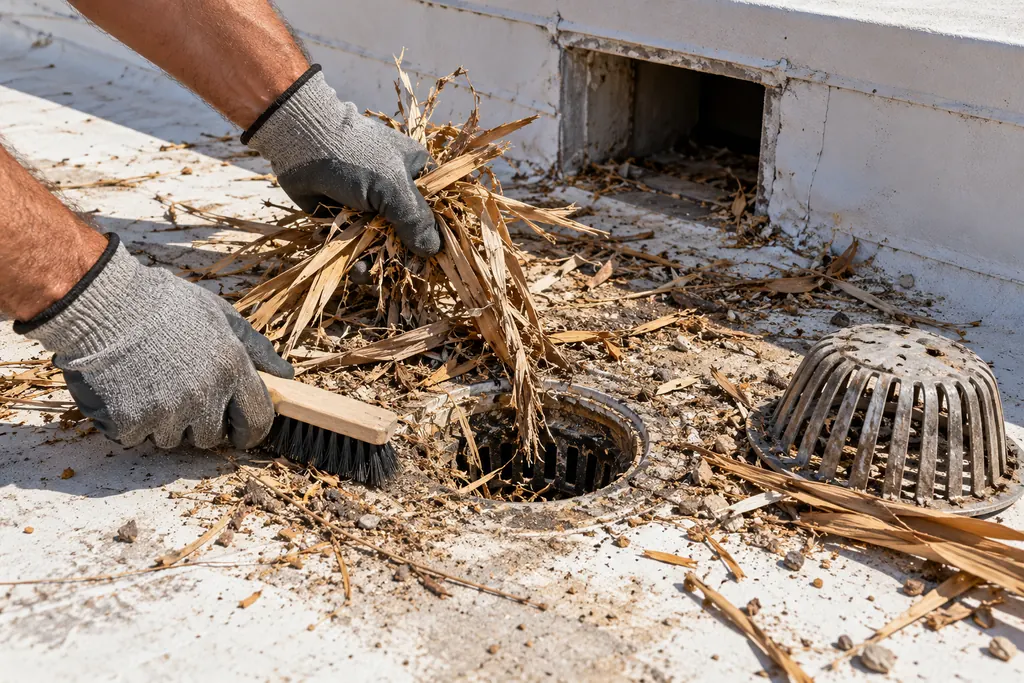
Debris in a scupper cut through the parapet holds water against the membrane until it finds a gap.
White mineral deposits on interior brick show water moving through the masonry from the roof edge.
Membrane turned up the parapet shrinks and pulls away from old brick, opening the corner where wall meets deck.
Water showing up next door points to the joint where two roofs meet at a common wall.
Two roofs tied together over a shared wall move differently, and the seam or flashing between them splits.
Plaster cracking below the top floor after summer often follows a roof surface worn thin by heat.
Granulated cap sheets and older coatings lose their surfacing under years of sun, exposing the membrane beneath.
Why It Pays
A downtown reroof is mostly edge work. These gains come from getting the parapets, coping, and scuppers right while the roof is open.
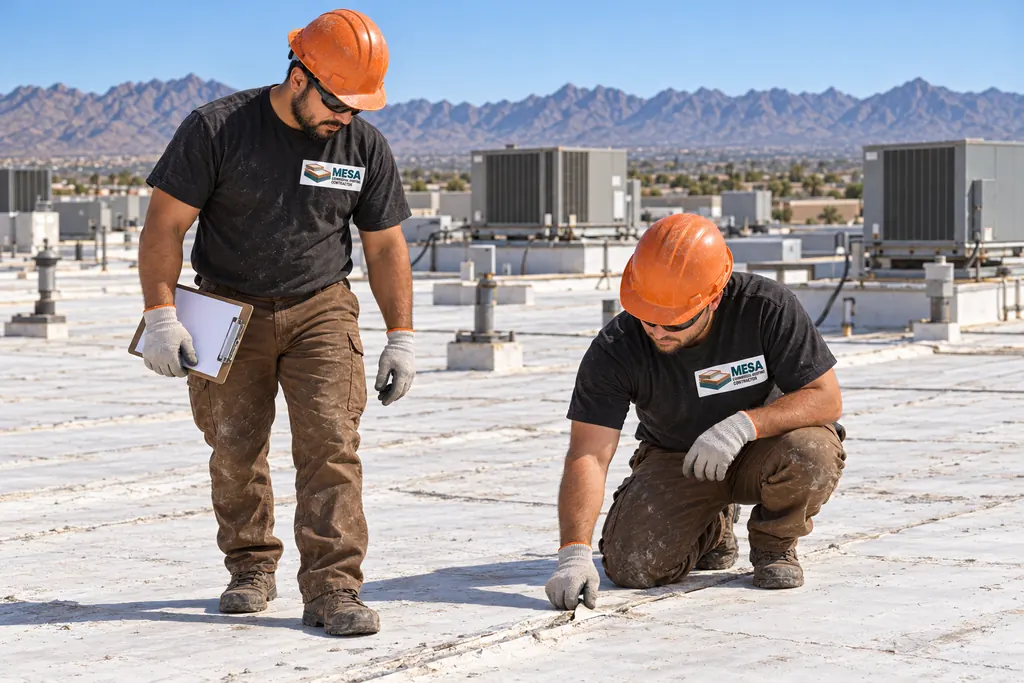
New base flashing up the parapet, sealed coping joints, and reset scuppers close the openings where older downtown buildings take on water. Handling that work during a reroof means fewer wall leaks to chase one storm at a time afterward.
Checking historic status before choosing materials keeps a visible roof change on a designated building from stalling once the old roof is open.
Staging from the alley where one exists keeps sidewalks and entrances open while material moves up to the roof.
Cleared and resealed scuppers move monsoon rain off low roofs behind parapets before it stands against the walls.
Systems
Two membrane systems fit the low roofs behind downtown parapets.
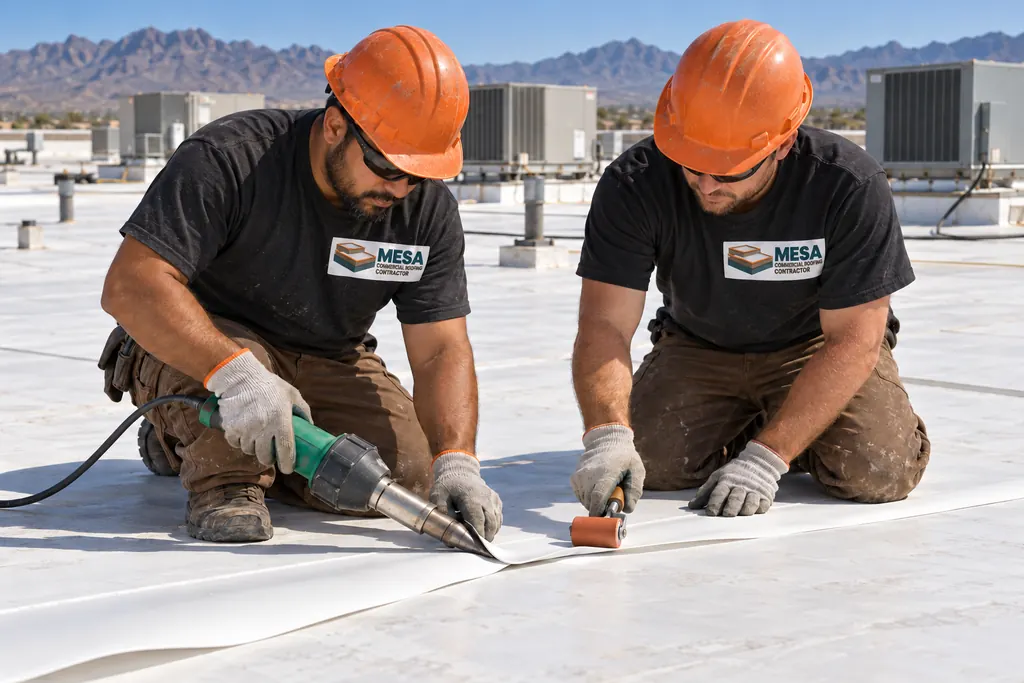
Welded TPO flashing turns up the parapet and wraps scupper openings as one piece, which fits storefront roofs with many wall details.
Best For
Look Elsewhere
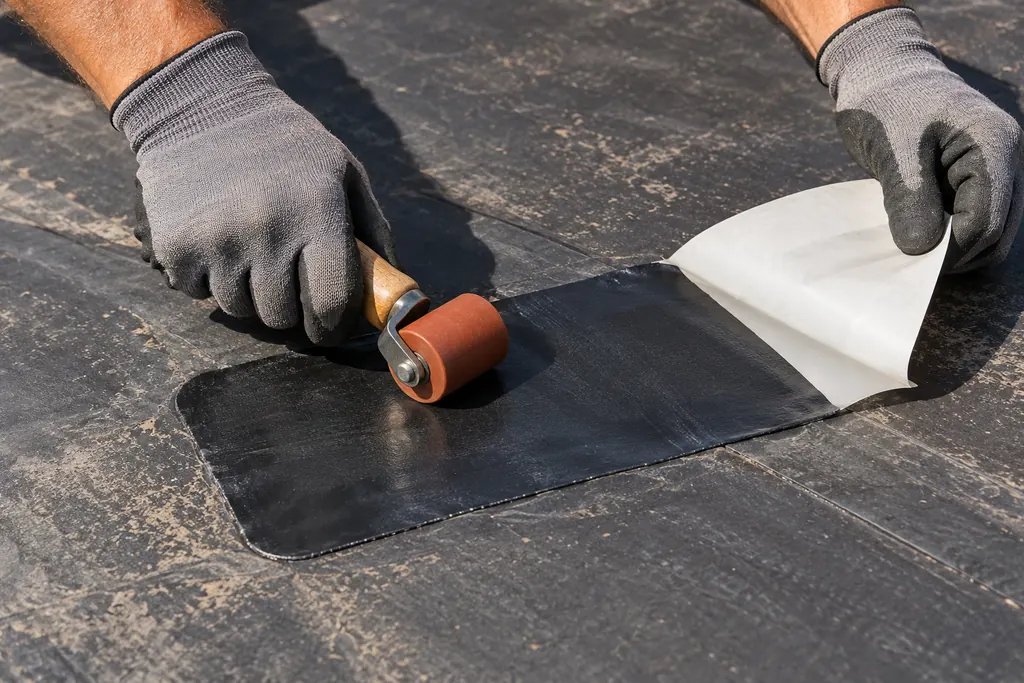
Older downtown buildings often already carry EPDM, and a sheet in fair shape can be repaired and coated instead of torn off between masonry walls.
Best For
Look Elsewhere
Call and tell us which wall and which suite, and whether a scupper or a shared roof sits above it.
Call UsDowntown Work Sequence
Five steps, adjusted for masonry walls, shared roofs, and historic review.
 Step 1
 Step 5
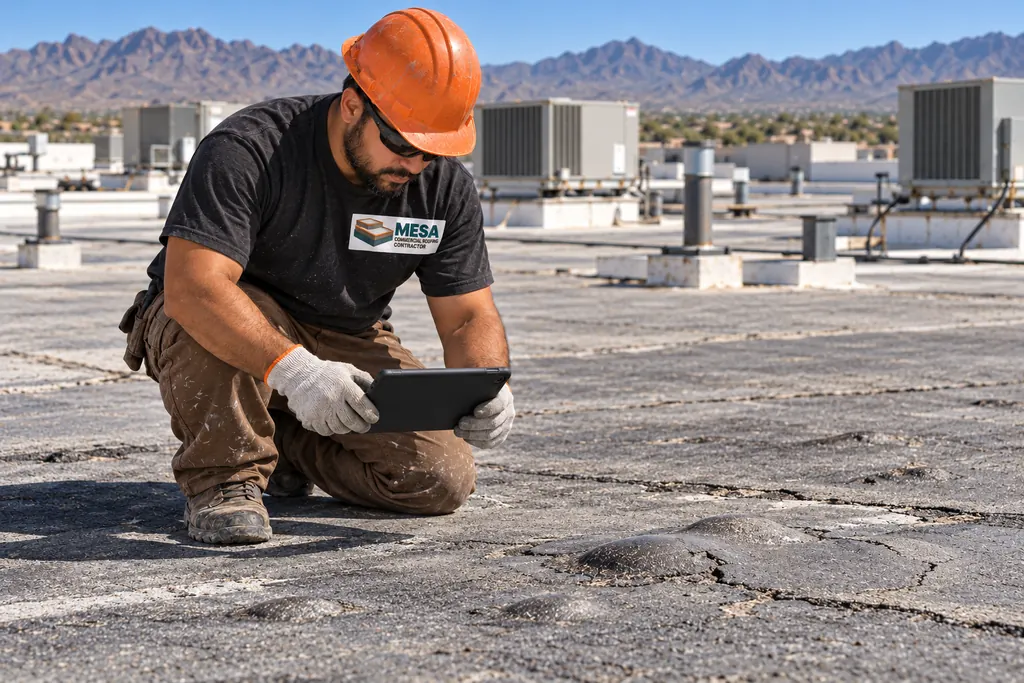
Starting at the edges, we check coping joints, parapet base flashing, through-wall scuppers, and the seams where neighboring roofs meet. A moisture check shows whether water has reached the insulation.
Before materials are chosen, we confirm with the Mesa Historic Preservation Office whether the building is a designated resource and whether the visible roof change needs Certificate of Appropriateness review.
Dry insulation and an intact membrane field point to edge repairs and new flashing. Wet board across the roof, or two existing layers, means removal down to the deck.
Material moves up from the alley side wherever one exists, so storefront doors stay open. Opened roof sections are dried in each evening, with tarps weighted against desert wind.
Parapet flashing, coping, and scuppers go in last and get checked with water before we leave. Then you walk the roof with us and see each edge detail.
Nearby Areas
Downtown sits west of central Mesa. These areas each have their own roof conditions and permit path.
Downtown Questions
Answers for owners of older storefronts and masonry buildings downtown.
Common Question
They can. Several of Mesa’s eight locally designated historic districts sit close to downtown, and the city also lists individual landmarks.
When a building is a locally designated resource, a roof change people can see from the street can need the city’s Certificate of Appropriateness review. We check with the Mesa Historic Preservation Office before choosing materials.
Downtown sits inside the City of Mesa, so reroof permits go through City of Mesa Development Services, the same office that covers the city’s other districts. Permit triggers and fees change, so we confirm the requirements for the address before work starts.
For incentive programs, yes. The City of Mesa runs its own electric utility for an area of about 5.5 square miles centered on downtown, while SRP serves most of the rest of Mesa. Any cool roof program depends on which utility serves the meter, so we confirm terms with that utility before ordering material.
We look at both sides of the joint. Two roofs tied together over a shared wall move differently, so the flashing between them needs room to flex. When a neighbor’s roof is part of the problem, we show both owners where the joint failed so the repair covers it.
Loose or cracked coping gets reset or replaced so its joints shed water away from the wall. On masonry caps the joints are resealed; on metal caps, new cleats and joint covers hold the pieces through wind. The base flashing below the coping is replaced at the same visit.
Through-wall scuppers sit at the lowest point of the roof, so they hold debris and water longest. The metal liner rusts and the seal to the membrane dries out. We clear the opening, replace or reline the scupper, and flash it into the new membrane.
Often, yes. Where an alley runs behind the building, material goes up from that side and debris comes down there too. On blocks without alley access, we plan a short, marked staging zone and work hours that keep storefront entrances clear.
Give the roof size and what you see at the parapets for a ballpark range, or call to schedule an edge inspection.
Roof Question
Leave a name and number, or call (623) 310-0175 now.