Drips Over A Production Line
Water on equipment or product near a fan line traces back to curbs overhead.
Failed Fan Curb Flashing
Vibration and heat at exhaust fans crack sealant and open the flashing seams around each curb.

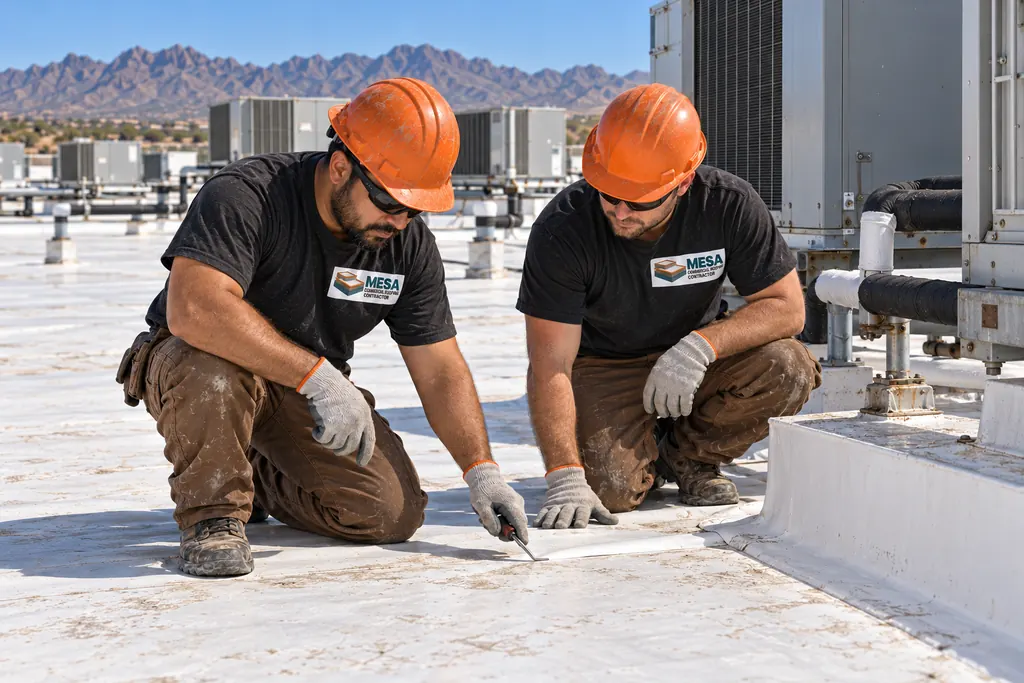
As an industrial roofing contractor, we roof Mesa plants, warehouses, and hangar-style buildings in sections, flashing every fan and clearing every drain while production runs below.
Fit
Industrial work fits large footprints with heavy rooftop equipment. The right column lists where a smaller scope or a different system makes more sense.
Industrial Roof Conditions
On big roofs, small details multiply across the span. Each pair matches what plant staff notice with the roof condition behind it.
Water on equipment or product near a fan line traces back to curbs overhead.
Vibration and heat at exhaust fans crack sealant and open the flashing seams around each curb.
Leaks near columns in the middle of a bay follow ponding on the span above.
Dust and debris pack drains across a wide roof, leaving standing water that works into worn seams.
Stains or drips at skylight openings show the curb flashing around them has let go.
Old skylight curbs crack at the corners, and hazed panels break under foot when crews step on them.
Maintenance techs feel the roof give along their usual path to units.
Weekly foot traffic with tools and parts crushes board along service routes when no walk pads are in place.
Trouble that starts soon after a new unit or duct goes in points to the penetration it needed.
Holes cut by equipment installers and filled with mastic open again within a few hot seasons.
Options
Four scopes for a large roof, matched to what the inspection finds.
| Option | When It Fits | What The Work Involves |
|---|---|---|
| Drain and curb program | Leaks at fans, stacks, and drains on a roof with dry insulation | Clear every drain, reflash curbs, replace failed penetrations, add walk pads |
| Bay-by-bay repair | Wet insulation confined to a few bays or roof sections | Cut out wet areas, replace board, new membrane tied into the existing roof |
| Recover in phases | One existing layer and dry insulation across most of the span | New cover board and membrane installed section by section over the old roof |
| Phased tear-off | Widespread wet insulation, two layers, or deck damage | Remove and replace one section at a time, dried in daily, deck repaired as found |
Why It Pays
These gains come from phasing and detail work, and they depend on the roof condition the inspection finds.
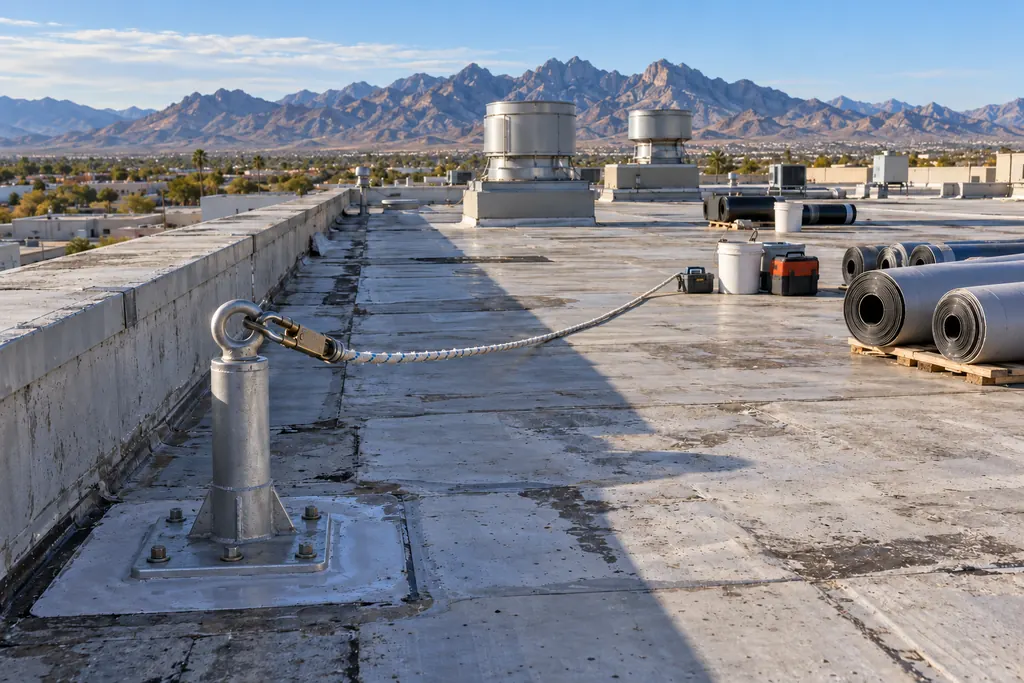
Sections sized to the bays below let the plant keep lines moving while the roof above another bay is opened. Lifelines, anchors, and skylight covers go in first, so crews can work near edges and openings without shutting down the floor.
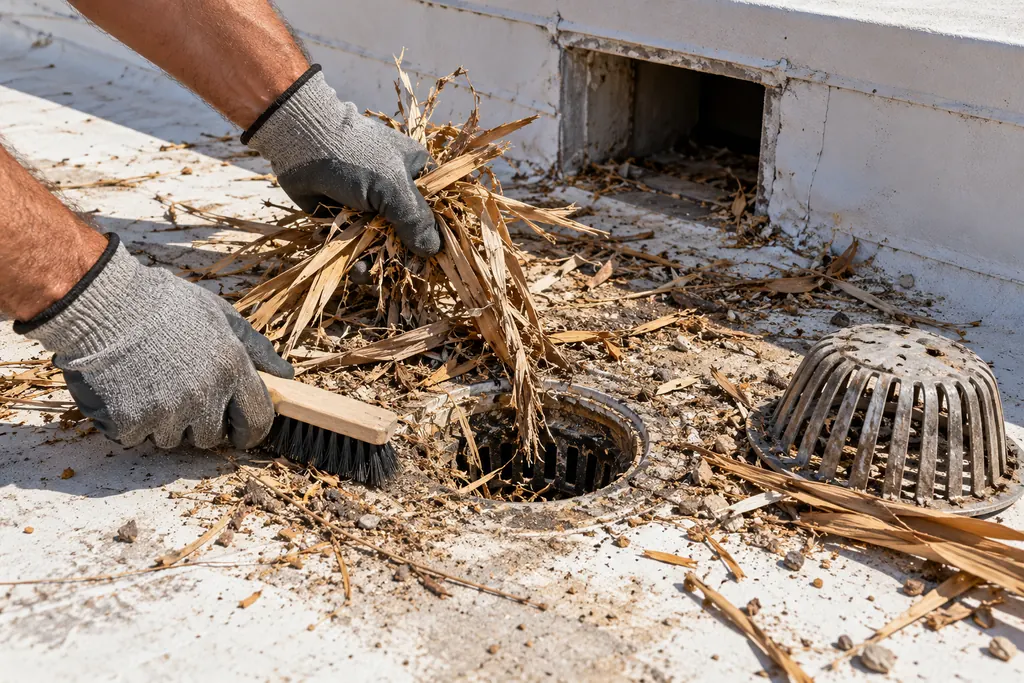
Cleared drains and scuppers, plus tapered insulation where water sits, keep standing water off the membrane between storms.
New flashing at exhaust fans and process stacks closes the openings where most plant roof leaks start.
Walk pads from the hatch to each unit protect insulation and give maintenance staff a clear path across the span.
Call with the bay or column line where water shows up and the equipment above it, and we can plan the inspection around your production schedule.
Call UsIndustrial Work Sequence
Five decisions take a plant roof from the first walk to a finished, phased job.
 Step 1
 Step 4
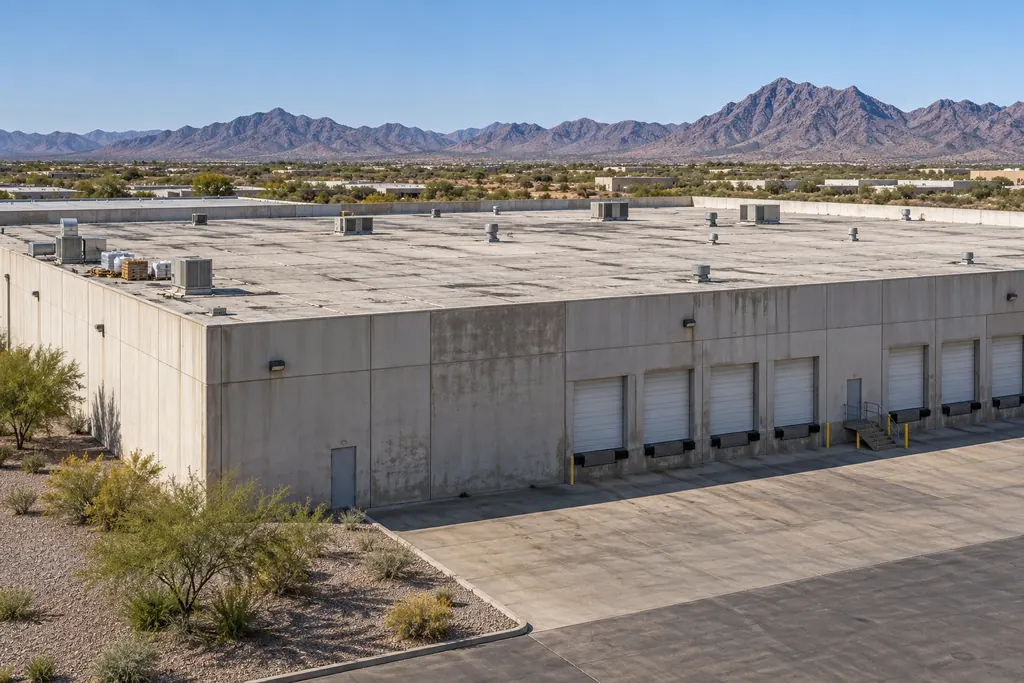
Mapping the roof by bay comes first: every drain, fan curb, stack, skylight, and edge, plus a moisture survey across the span. You get photos tied to the column lines below.
Dry insulation across most bays favors a drain and curb program or a recover. Wet board spread through the span, or a second existing layer, points to a phased tear-off.
Lifelines, anchors, skylight covers, and the hoisting point are set before any roofing starts. Hatch access, material staging, and truck routes are agreed with plant management.
Each section opens only when the area below is cleared for work, gets new insulation and membrane, and is dried in before the crew leaves. Fan lockouts follow your maintenance schedule.
You walk each finished section with us, including drains and curbs. A spring and fall check keeps scuppers clear and catches damage from equipment service early.
Related Services
Most plant and warehouse roofs in Mesa are TPO or metal.
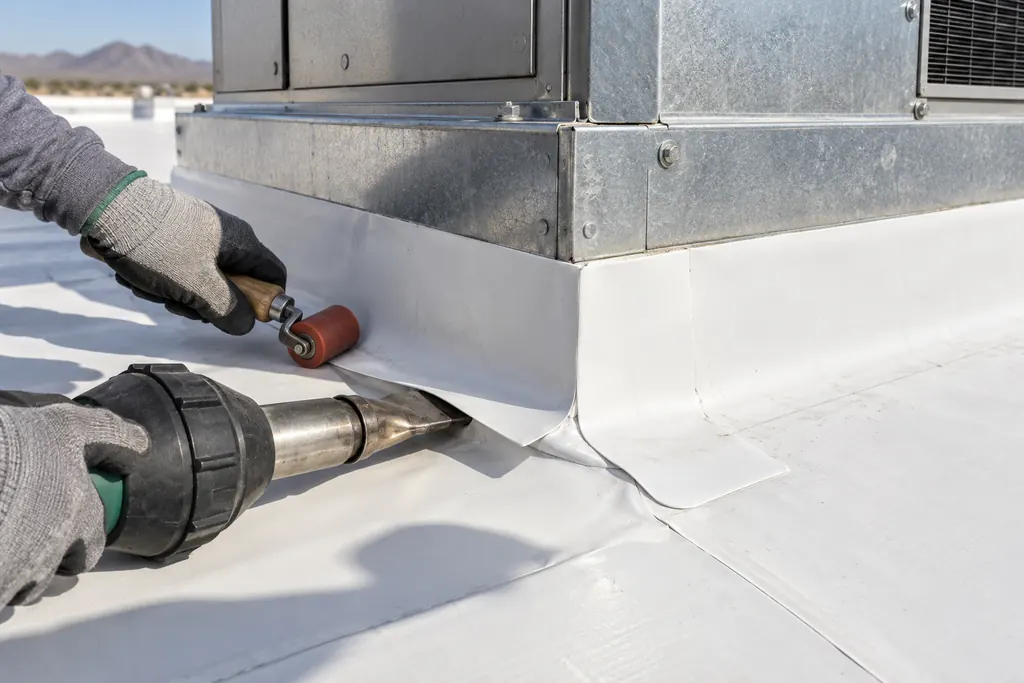
Wide TPO sheets with welded seams cover large low-slope spans, and welded flashing closes the curbs around fans and units.
TPO roofing in Mesa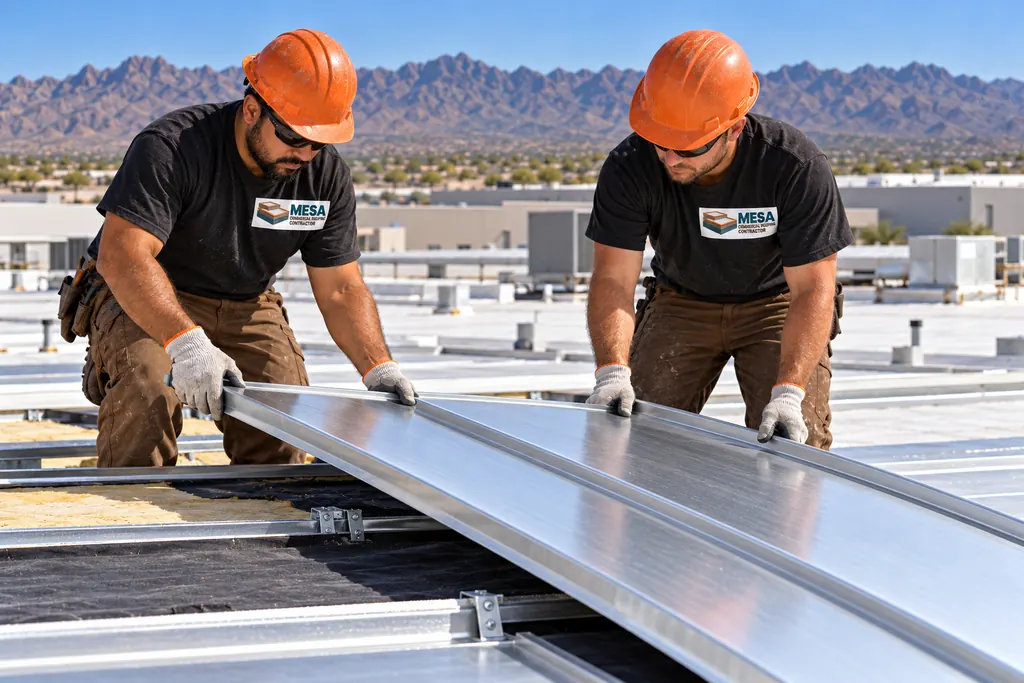
Hangars and pitched plant buildings often carry metal panels, where fastener replacement and sealed laps restore an aging roof.
Commercial metal roofing in MesaIndustrial Questions
Answers about plant, warehouse, and hangar roofs in Mesa.
Common Question
Yes. Our industrial work covers distribution centers, manufacturing plants, and hangar-style buildings across Mesa, including the big facilities around Falcon Field and the Gateway area.
Those roofs need four things a small roof rarely does: many drains and scuppers kept clear across wide spans, tight flashing at exhaust fans and process equipment, safety planning around skylights and edges, and work phased so production lines stay open.
The roof is split into sections that match the building below, so the area over an active line opens only when the plant agrees. Each section is dried in before the crew leaves, and work over sensitive rooms is moved to shutdown windows or weekends you set.
Each fan curb and stack gets new flashing sized to the curb, with the membrane carried up the side and terminated under a counterflashing or clamp. Lockout of the equipment is arranged with your maintenance staff before anyone works at the curb.
Skylights get screens or covers before work starts in that bay, and roof edges get a warning line or a lifeline tied to roof anchors. We walk the roof first to mark hazards, since plant roofs often carry skylights in rows across the whole span.
Wide spans deflect between supports, and drains and scuppers clog with dust and debris after a monsoon season. Both leave water standing in the field. We clear and check every drain during inspections and add tapered insulation or crickets during a replacement where water sits.
Yes. Maintenance techs cross the same paths to fans, units, and stacks every week, and their traffic crushes insulation and scuffs the membrane. Walk pads along those routes spread the load and give the roof a marked path from the hatch to each piece of equipment.
It can, with a curb and flashing set into the membrane by a roofer. Holes cut by an equipment installer and sealed with mastic are a common leak source on plant roofs. When you plan new units or ductwork, call us so the curb is built into the roof system.
Send the roof size and condition for a ballpark range, or call to schedule a bay-by-bay inspection of the span.
Roof Question
Leave a name and number, or call (623) 310-0175 now.